
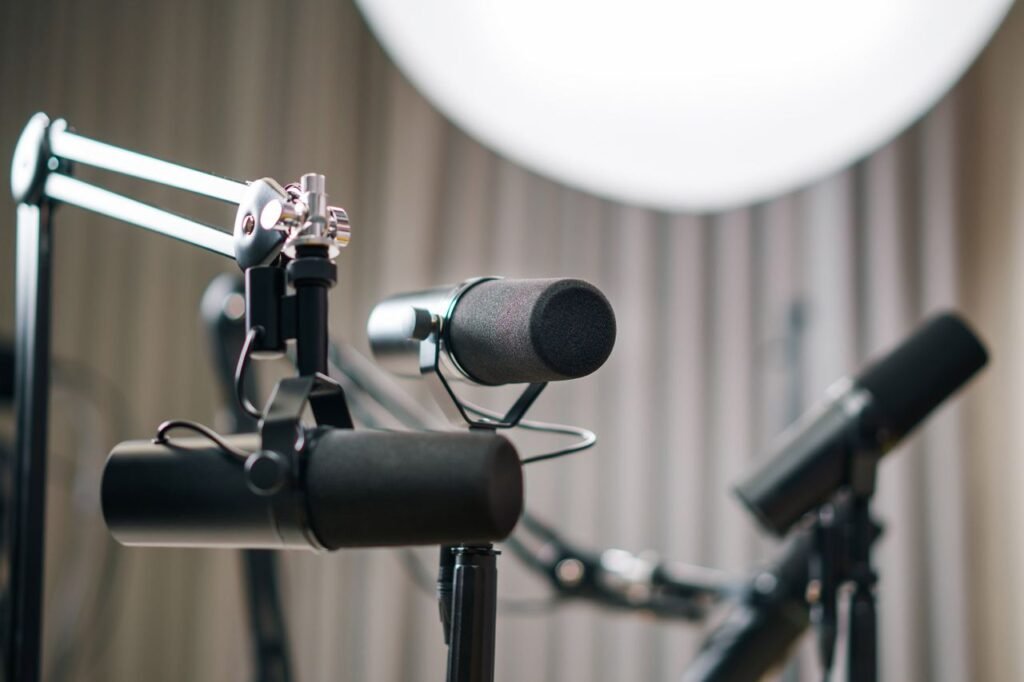
Podcasts and online radio shows have no picture to tell listeners when something changes. In a video, a new shot shows that one scene has ended and another has begun, but in audio the listener depends entirely on what they hear. When a host moves from an introduction to an interview, or from a story to an ad break, the change can blur if nothing marks it. Many shows solve this with short sound cues that signal each shift in the episode. This article explains how producers use these cues and how any show can apply the same approach.
Table of Contents
Why audio needs clear signposts
Listeners often play podcasts while they are doing something else, such as driving, cooking or exercising. Their attention moves in and out, so they need simple signals that tell them where they are in the episode. Spoken signposts like “after the break” help, but they take time and can sound repetitive across a season. A short sound can do the same job in a second or two without interrupting the conversation. That is why a spoken line and a sound cue often work best together at each change of segment.
Among the most common of these cues are whooshes, short sounds that suggest air or motion passing the listener. They work well in audio because the ear naturally hears them as movement from one place to another. A soft one can carry a show from its opening chat into the main topic, while a sharper one can mark a jump to a highlight or a new guest. They also take up very little space, which keeps the focus on the voices. Used the same way in every episode, they help regular listeners follow the structure without thinking about it.
Where a whoosh fits in an episode
Many podcasts begin with a short clip from later in the episode, played before the theme music and introduction. A cold open needs a clear exit, otherwise listeners may think the conversation simply started in the middle. A whoosh placed at the end of the clip, leading into the theme, tells the audience that the preview is over and the show proper is beginning. The same cue can also lead into the clip at the very start. Placing the same cue at the same point each week means returning listeners know exactly when the episode proper begins.
Segment changes are the second natural place for a transition sound. A show that moves from news to an interview, or from a listener question to a recommendation, benefits from a clear marker between each part. A medium-length whoosh followed by a short pause gives listeners a moment to reset before the next topic starts. Some shows pair it with a spoken segment name, which helps listeners who skip around in the episode. The aim is to make each part of the show feel distinct while keeping the episode connected as a whole.
Ad breaks and sponsor reads are the third moment where sound helps. Knowing when the main content pauses and when it returns helps listeners, especially in long episodes. A whoosh into the break and a matching one out of it frame the sponsor message clearly and keep it separate from the editorial conversation. This separation also supports trust, and it sits comfortably alongside the clear sponsorship disclosure that the FTC’s guidance for creators expects. On online radio, the same approach works for station IDs and announcements between songs or shows.
Choosing and placing the right sound
The style of the sound should suit the tone of the show. A calm wellness or interview podcast fits soft, airy whooshes that pass by gently. A lively entertainment or sports show can carry brighter, sharper versions with more energy. Tonal cues built on a musical note can work too, as long as they do not clash with the theme music. Testing two or three options against the opening theme is usually the quickest way to find one that belongs.
Level and timing make the difference between a cue that helps and one that distracts. A transition should sit below the speaking voice, so it never forces the listener to reach for the volume. Placing it in the gap between sentences, rather than over the last word, keeps the speech clear. A short pause of half a second to a second after the sound gives the next segment a clean start. Keeping each cue on its own track in the edit makes it easy to adjust later without touching the voices.
Changes in recording quality are a less obvious place where a cue helps. Many shows combine a host recorded in a treated room with a guest on a video call, a voice memo from a listener or a clip from an earlier episode. Each of these sources sounds different, and jumping between them without warning can make the change in quality feel like a technical problem. A short whoosh just before the switch prepares the ear, so the new sound reads as a deliberate change of scene. It also gives the editor a natural place to balance the levels of the two sources.
A podcast in practice
One independent wellness host learned this from her own listeners. Maya Lindqvist records a weekly podcast that combines a guest interview with a short listener Q&A. Her early episodes moved straight from the interview into listener questions, and several listeners told her they could not tell where one part ended. She added a soft whoosh between the two segments and a matching pair around the sponsor read. The conversations stayed the same, but listeners now mention that the show feels easier to follow.
Sourcing cues that sound finished
Producers can record their own transition sounds, but many work from ready-made libraries that are already cleaned and edited. Ocular Sounds builds its whooshes from real recordings such as rustling leaves, a passing train, tearing paper and the whir of an old DVD player, then layers and shapes them until the motion feels right. The range runs from soft, barely noticeable passes to large, aggressive sweeps, so there is a suitable cue for a quiet reflective episode as well as a busy panel discussion. Purchases come with a commercial license and no royalties to pay, which keeps things simple for shows that carry sponsors. Starting from a finished sound leaves more editing time for the conversation itself.
Conclusion
A podcast can have strong guests and good conversation and still lose listeners who cannot follow where the episode is going. The best place to start is the last episode published; listen back without looking at the waveform and mark every point where the topic changes. Any change that a new listener might miss is a candidate for a short cue, starting with the one that feels least clear. Listening to how other interview shows move between topics can also spark useful ideas. A few seconds of sound in the right places can keep listeners with the show from the first minute to the last.