
Key Takeaways
- Bone loss, gum recession, mobility, and infection do not automatically mean a tooth must be extracted.
- Dr. Scott Froum assesses the tooth, bone, gums, bite, restorability, and maintenance needs before recommending a path.
- Potential treatments may include periodontal therapy, bone grafting, gum grafting, biologic healing support, laser-assisted care, and splinting.
- A natural tooth should be preserved only when it can provide a stable and maintainable long-term result.
- Dental implants remain an important option when a tooth cannot be predictably saved.
A tooth that feels loose, painful, or damaged does not always need to be removed. In many cases, a careful periodontal evaluation can reveal treatment options that may preserve the natural tooth and its supporting structures. Through saving natural teeth in NYC, Dr. Scott Froum helps patients explore whether teeth affected by gum disease, bone loss, recession, or infection can be treated before extraction becomes necessary.
For patients wondering, can my teeth be saved? Dr. Froum evaluates each situation individually, considering the tooth’s condition, remaining bone support, gum health, and long-term prognosis. Based in Midtown Manhattan, his periodontal practice provides specialized care for patients seeking an informed assessment of tooth preservation and appropriate treatment alternatives.
Table of Contents
- Can a Tooth Be Saved Before Extraction?
- Why Preserve Natural Teeth?
- Problems That May Be Treatable
- How a Tooth-Saving Evaluation Works
- Treatment Options
- Saving a Tooth Versus an Implant
- Treatment Timeline, Cost, and Second Opinions
- Frequently Asked Questions
Can a Tooth Be Saved Before Extraction?
In selected cases, yes. Teeth affected by periodontal bone loss, gum disease, mobility, recession, or localized infection may still respond to treatment. However, extraction may be appropriate when a tooth is fractured beyond repair, cannot be restored, has an uncontrolled infection, lacks sufficient support, or would pose greater risk if retained. The decision should be based on the tooth’s prognosis, not simply on whether saving it is technically possible.
Why Does Preserving a Natural Tooth Matter?
Natural teeth are supported by the periodontium, including the periodontal ligament, gum tissue, and surrounding bone. The periodontal ligament helps anchor teeth and provides sensory feedback during chewing. Preserving a healthy or treatable tooth may also help maintain the position of neighboring teeth and avoid the multiple stages that can accompany extraction, grafting, implant placement, and final restoration.
That said, preservation is not an end in itself. A tooth that remains painful, unstable, uncleanable, or likely to fail soon may not be the best long-term choice.
Which Problems May Respond to Tooth-Preservation Treatment?
- Bone loss from periodontal disease: Infection control and regenerative treatment may be considered when the pattern of bone loss is favorable.
- Loose teeth: Mobility may improve when inflammation is controlled, bite forces are managed, and remaining support is protected.
- Gum recession and exposed roots: Soft-tissue grafting may improve tissue thickness, cover selected root surfaces, and reduce sensitivity.
- Persistent infection: Periodontal treatment may be coordinated with restorative or endodontic care when appropriate.
- A “hopeless” diagnosis: A second opinion can assess restorability, root structure, bone support, bite forces, and the patient’s ability to maintain the area.
How Does Dr. Scott Froum Determine Whether a Tooth Is Saveable?
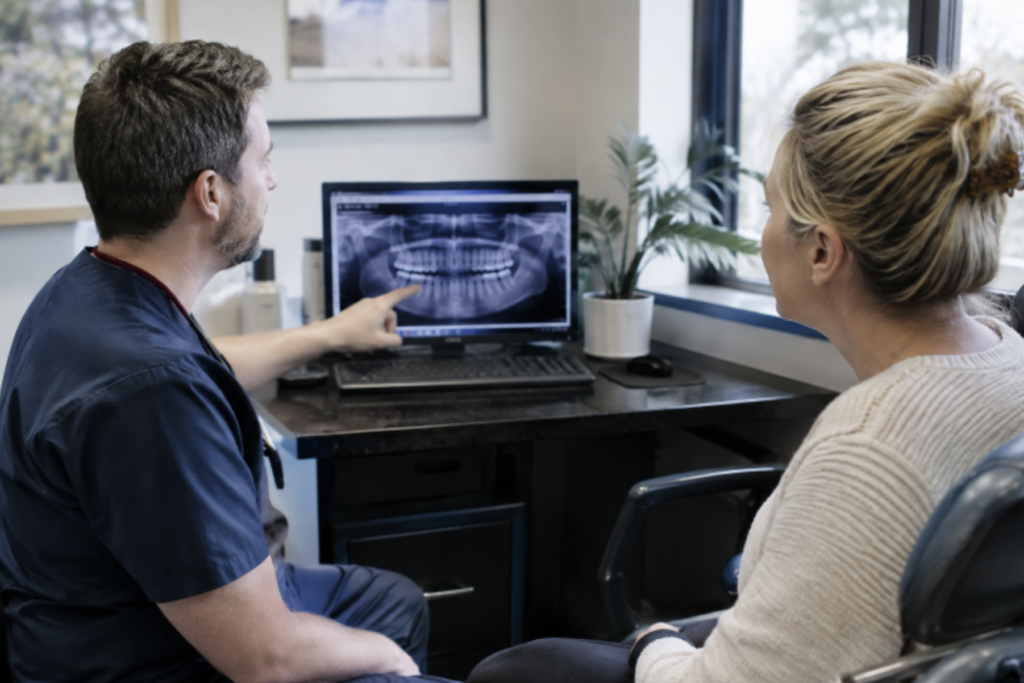
A tooth-saving consultation is a structured process. Dr. Froum reviews symptoms, medical and dental history, medications, prior treatment, gum-pocket measurements, bleeding, recession, mobility, and imaging. He also considers the extent and pattern of bone loss, infection, fracture risk, root anatomy, bite forces, and the ability to effectively restore and clean the tooth.
Age alone does not decide the outcome. Healing ability, smoking, systemic health, oral hygiene, medications, and commitment to maintenance can all affect prognosis.
Which Treatments May Support a Natural Tooth?
Bone Grafting and Regeneration
When bone loss occurs in a treatable pattern, grafting materials and regenerative techniques may be used to support the rebuilding of bone around a tooth. Periodontal treatment can also include biologic materials that support healing. These approaches are case-specific and do not predictably recreate support for every defect.
Gum Grafting and Laser-Assisted Care
Gum grafting may help protect exposed roots and improve the thickness of vulnerable tissue. Laser-assisted periodontal treatment may be incorporated in selected cases to address diseased tissue and bacteria as part of a broader treatment plan.
Splinting and Coordinated Restorative Care
A splint can connect a loose tooth to neighboring teeth for stabilization when indicated. Preservation may also require coordination with a general dentist, endodontist, orthodontist, or restorative dentist for root canal treatment, crowns, bite adjustment, or other care.
How Does Saving a Tooth Compare With Extraction and an Implant?
A dental implant can be an excellent replacement when a tooth truly cannot be saved. It is not automatically a better choice than a stable, restorable natural tooth. A recent 10-year cohort comparing tooth preservation with implant replacement found comparable survival and patient-reported outcomes in appropriately selected cases, while the implant pathway involved more visits, downtime, and higher observed costs.
- Tooth preservation: Keeps the existing tooth and its periodontal ligament when the tooth is functional and maintainable.
- Extraction and implant replacement: Removes the tooth and may require healing time, grafting, implant surgery, and a final crown.
- Both pathways: Require ongoing professional monitoring and consistent home care.
Treatment Timeline, Cost, and Second Opinions
Complex preservation often occurs in stages: diagnosis, infection control, regenerative or soft-tissue treatment, stabilization when needed, healing, and long-term periodontal maintenance. Costs vary with the number of teeth involved, imaging, grafting materials, biologic therapy, restorative needs, sedation, and follow-up visits. A meaningful estimate should compare the entire treatment pathway, not just a single procedure.
Patients told that a tooth is hopeless, those with worsening mobility or advanced bone loss, and patients weighing an implant may benefit from a second opinion. Urgent swelling, fever, facial infection, trouble breathing, or trouble swallowing require prompt dental or medical care and should not be delayed for a routine consultation.
Frequently Asked Questions
Can a tooth with severe bone loss still be saved?
Sometimes. The prognosis depends on the location and extent of bone loss, tooth anatomy, infection control, bite forces, and the patient’s ability to maintain the result.
Is saving a tooth always better than getting an implant?
No. A maintainable natural tooth may be worth preserving, but an implant may be safer when the tooth is unrestorable, fractured, or unlikely to remain functional.
How long does tooth-saving treatment take?
Timelines vary. Some cases need several phases of treatment and healing before the final prognosis can be assessed.
Where does Dr. Scott Froum provide care?
Dr. Scott Froum provides periodontal and tooth-preservation care from his Midtown Manhattan office at 1110 2nd Avenue, Suite 305, New York, NY 10022.
Conclusion
A recommendation to remove a tooth deserves a clear explanation of why preservation may or may not be possible. Dr. Scott Froum helps patients in Midtown Manhattan and throughout NYC explore their options through individualized periodontal evaluations and treatment planning. By assessing the tooth’s condition, supporting bone, gum health, and long-term maintainability, he helps patients make informed decisions about preserving natural teeth when feasible or choosing replacement when necessary. The goal is not to save every tooth at any cost, but to find the most appropriate path toward lasting oral health and function.