A strong trade show presence gives visitors a clear reason to stop, participate, and remember the brand after the event. Static displays still have a place, but they rarely create the sustained attention needed on a crowded show floor. Exhibitors can earn more meaningful engagement by designing an experience around specific audience needs, supporting it with reliable execution and measuring what visitors actually do.
Image credit: Unsplash
Table of Contents
Why Traditional Booths Fall Flat
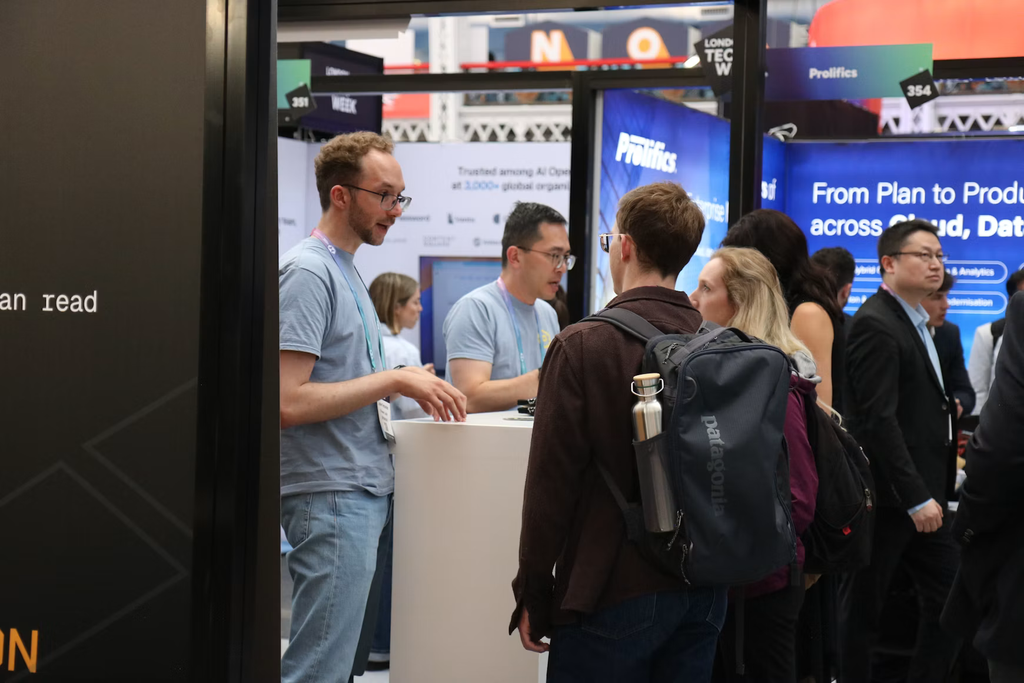
Traditional booths often depend on printed graphics, product displays, and staff members waiting for someone to approach. That setup places most of the effort on the visitor. In a busy hall filled with competing messages, people may glance at the signage and keep walking because they don’t immediately see an opportunity to participate.
Visibility also depends on more than physical size. A smaller exhibit with a clear message can outperform a large space that lacks focus. Start by identifying one action you want visitors to take. That might be testing a product, creating a personalized sample, or completing a two-minute demonstration. Design signage, lighting, and staff conversations around that single action. Even practical choices such as the type of branded event canopy you use can affect visibility, traffic flow, and how approachable the space feels.
The experience should feel consistent from the moment someone notices the booth to the point when they leave. Clear visual cues, simple instructions, and staff who know how to guide participation can make the exhibit easier to understand and more memorable.
Creating Interactive Environments
An interactive environment gives visitors an active role in the brand story. Useful formats include touchscreens that recommend products, guided demonstrations, creative stations, and motion-responsive displays. The interaction should be easy to understand within a few seconds, since long instructions can discourage people who are already managing a full event schedule.
Map the visitor experience from the aisle to the exit. First, decide what attracts attention from 20 feet away. Next, plan how a staff member or visual cue introduces the activity. The final step should give the visitor something valuable, such as a digital result, practical recommendation, or shareable piece of content.
Physical design must support that flow. Keep entrances open, prevent lines from blocking neighboring exhibits, and provide an accessible route through every activity. For concepts involving custom structures, integrated technology, or live components, brands and agencies can use experiential activation services for professional assembly, installation, testing, and breakdown. Planning this support early gives the creative team time to resolve power needs, installation schedules, and technical dependencies before opening day.
Expert Execution for Complex Setups
A creative concept only succeeds when every component works under real event conditions. Complex exhibits may involve screens, sensors, lighting controls, custom pieces, and several power sources. Build a detailed installation plan that identifies the arrival time, assembly order, test procedure, and person responsible for each system.
Testing should reproduce the visitor experience from beginning to end. Ask a team member who hasn’t seen the design to follow the on-screen prompts or complete the activity without coaching. Their confusion can reveal unclear instructions, awkward sightlines, or delays that the project team has stopped noticing.
Prepare for routine failures as well. Keep backup cables, replacement devices, and offline versions of essential content close to the exhibit. Assign one person to approve technical changes so several vendors aren’t solving the same issue in conflicting ways.
For a multi-city program, document settings and packing methods after the first installation. Take labeled photos of cable paths, component positions, and completed assemblies. A repeatable record helps each location deliver the same visitor experience while reducing setup time and avoidable errors.
Measuring Trade Show Engagement
Foot traffic provides context, but it can’t show whether an exhibit created useful interest. Select measurements that correspond to the event’s business objective. If the goal is product education, track completed demonstrations and follow-up content requests. For lead generation, record qualified conversations, scheduled meetings, and responses after the show.
A simple measurement plan might include:
- Number of visitors who enter the experience
- Percentage who complete the main interaction
- Average time spent in the space
- Qualified contacts collected with permission
- Meetings or sales opportunities created within 30 days
Interactive screens and badge scans can collect some of this information, while staff notes add context. Record common questions and points where visitors leave early. Those observations can explain why completion rates rise or fall.
Useful trade show engagement ideas include social displays, polls, and live content that encourage participation. Choose tools based on the audience and objective, then compare results across event days. Review performance during the show as well as afterward. If visitors repeatedly miss an instruction, adjusting the sign that evening may improve the remaining sessions.
Future of Event Exhibiting
Event exhibits are becoming more responsive and adaptable. Visitors increasingly expect content that reflects their interests, so exhibitors are using short preference surveys, digital profiles, and modular demonstrations to tailor the experience. A visitor might answer three questions on a tablet, then receive a product demonstration built around those responses.
Hybrid content will also remain useful. A physical interaction can generate a digital resource that attendees revisit later, extending the value of a brief show-floor conversation. Exhibitors should collect only the information they need, explain how it will be used, and provide a straightforward consent process.
Sustainable design is shaping planning decisions too. Modular structures, reusable graphics, and adaptable digital content can support several events without rebuilding an exhibit from scratch. These choices may reduce shipping volume and make updates easier between tour stops.
The most effective future-facing exhibits will still depend on basic human behavior. People participate when the purpose is clear, the activity respects their time, and the result feels useful. Before approving an ambitious feature, test it with someone outside the project. If that person can understand the invitation and begin within a few seconds, the concept is ready for more detailed development.