Artificial intelligence is rapidly transforming the fashion industry — from content production and eCommerce to diversity, customer experience, and global brand storytelling.
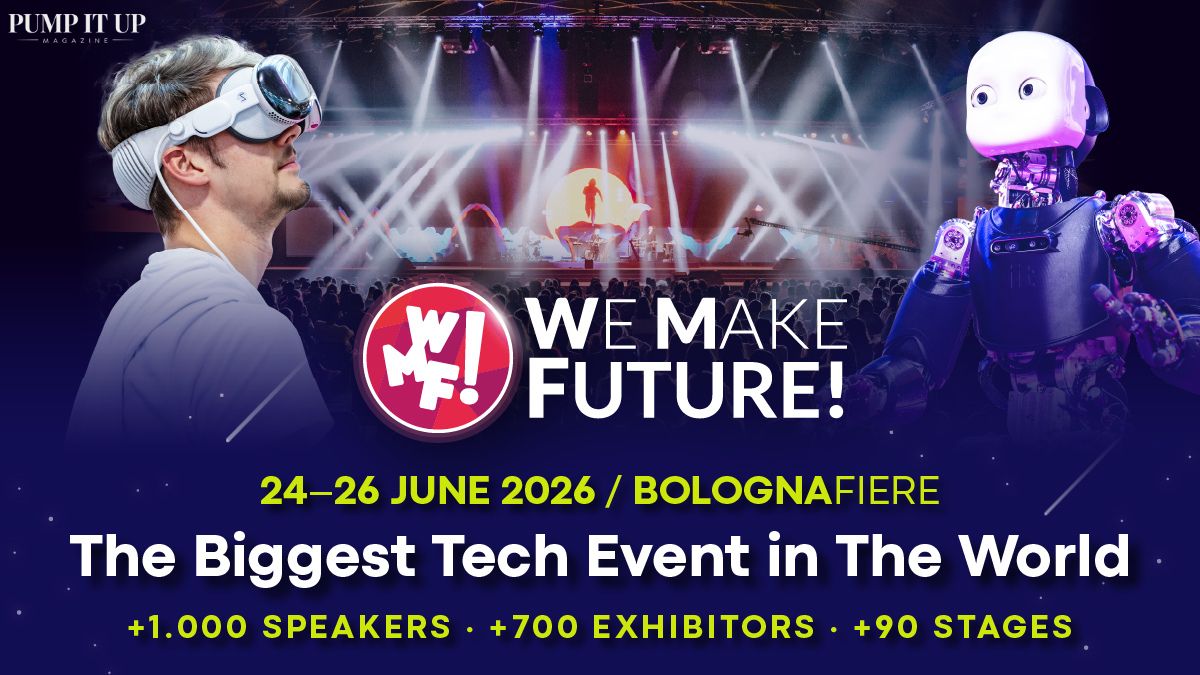
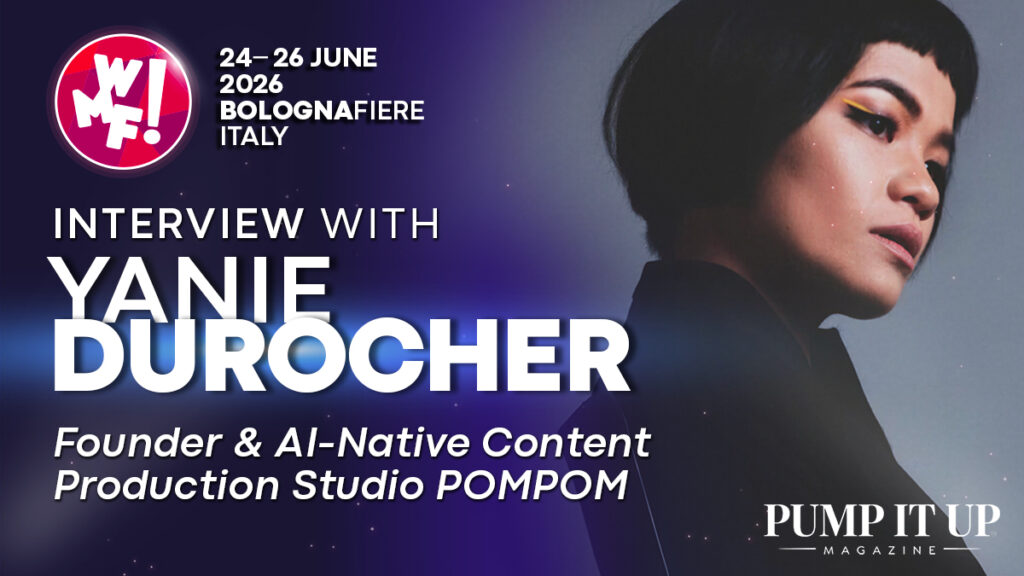
As part of our official WMF 2026 coverage, Pump It Up Magazine speaks with Yanie Durocher, founder of POMPOM, a GEN AI-native content production studio helping fashion brands across China and Europe create high-volume visual content without multiplying production costs.
With more than 15 years of experience managing large-scale photoshoots, branding, and campaigns across Asia, Yanie is helping reshape how fashion brands think about AI, inclusivity, localization, and creative production in the digital age.
At WMF 2026, she will present her keynote:
“The Authenticity Paradox: Solving Fashion’s Fit Crisis with GenAI”
Exclusive Ticket Offer (Limited Time)
Pump It Up Magazine readers can access a special rate:
Get your ticket here: https://www.wemakefuture.it/ticket/
- Full 3-Day Ticket: €149 (instead of €179)
- Use code: WMF26PUMP
- Valid until May 22
About Yanie Durocher
Yanie Durocher is the founder of POMPOM, a GEN AI-native content production studio helping fashion brands across China and Europe produce high-volume visual content without multiplying shoot costs.
With 15 years of on-the-ground experience managing high-volume photoshoots, branding, and brand campaigns across greater China, she identified a structural flaw in how fashion content is made — and built a system to fix it.
She is a speaker at WMF 2026, one of Europe’s leading innovation and technology festivals, where she presents on how generative AI is transforming fashion’s visual production, diversity, and returns loop.
Learn more about the program and speakers:
https://en.wemakefuture.it/next/schedule/
As AI continues reshaping the future of fashion and eCommerce, Yanie shares how brands can combine technology, creativity, and inclusivity at scale.
Interview
What inspired you to create POMPOM?
Yanie Durocher:
“POMPOM started in Shanghai in 2017. I was managing high-volume photoshoots across Asia and the inefficiency was impossible to ignore — weeks of logistics for content used once and never adapted.
In 2019 I started exploring CGI, motion design and digital avatars as alternatives, then AI changed everything.
But the real thread goes back further: growing up in Canada, I was so petite that everything needed to be retailored, and my mom was XXL — she couldn’t walk into nice boutiques and find anything. We’d end up at Walmart. Size inclusivity was never a trend for me. It was personal.”
Why has authentic representation traditionally been so difficult to achieve at scale?
Yanie Durocher:
“A traditional photoshoot is a fixed event. One model, one location, one set of samples — that’s what you get.
Showing the same garment on five different body types means five castings, five fittings, potentially five shoots. The economics make it genuinely unaffordable for most brands.
The paradox is that diverse representation sells better, but the system makes it cheaper to keep showing the same thing. GenAI breaks that equation.”
How is GenAI transforming diversity, localization and customer experience?
Yanie Durocher:
“You no longer have to choose between production cost and representation.
Shoot once, then generate authentic variants across body types, skin tones and regional contexts without going back to set.
For localization, a CNY capsule no longer needs a separate Shanghai shoot — the creative direction stays consistent, the execution adapts.
Brands that have tested diverse body representation on their PDPs — ALO and Lululemon being public examples — saw add-to-basket rates increase. That’s not a soft metric.”
How can AI enhance creative direction rather than diminish it?
Yanie Durocher:
“Every time a new creative tool emerged — photography, then video, then digital — artists called it a threat.
Painters said photographers were lazy. The same happened when video came along. Each time, the tool didn’t kill creativity. It democratized it and opened new possibilities.
AI is no different. The creative decisions — mood, casting, brand voice, cultural nuance — still require a human with taste. AI just removes the logistical ceiling on executing those decisions.”
What are the biggest mistakes brands make with AI content today?
Yanie Durocher:
“Using AI as a replacement for experience rather than an extension of it — I’ve seen brands run physical shows and fill the room with screens of AI collections. The people there came for an experience, not a screen.
Refusing to use AI out of fear while continuing to publish mediocre traditional content. The fear of being caught using AI is costing more than using it well ever would.
Waiting indefinitely. Some brands have been in evaluation mode for two years. That window is closing.
Skipping quality control. Bad AI gets spotted — warped hands, distorted seams. When it’s done well it should be invisible. Brands that skip QC are creating the trust problem they were afraid of.
Treating the AI tool as the creative director. It generates. It doesn’t have a point of view. Brands that hand the brief directly to the model and publish what comes out end up looking like everyone else — because everyone is prompting the same tools the same way.”
What does “AI-native production” truly mean?
Yanie Durocher:
“It’s not adding a motor to a bicycle. It’s building a car.
Workflows, asset generation, localisation, iteration, scaling and content distribution are all designed from scratch assuming AI is the production layer.
In practice: brief goes directly into visual production, SKU assets are the inputs, styling direction comes before generation, human QC before delivery.
No samples, no casting, no fittings. The timeline goes from 4–6 weeks to 1–3.”
How can AI visual content reduce returns and improve customer confidence?
Yanie Durocher:
“Returns come from two places: fit anxiety and style misread. Both are expectation gaps, and both are addressable with better visual content.
When a customer can see how a garment sits on a body similar to theirs, they make a more informed decision.
More confidence at purchase means fewer disappointed customers after delivery.
AI-native production makes showing multiple body types across hundreds of SKUs economically viable — that’s not a traditional production conversation.”
What limitations does GenAI still have in fashion?
Yanie Durocher:
“Complex textiles are still a challenge — heavy brocades, intricate embroidery, technical draping. AI tends to flatten surface texture or hallucinate detail in ways that don’t hold up.
Pattern-matching across seams is inconsistent.
Lingerie is constrained by content policy guardrails rather than technical quality — knowing that upfront is part of producing responsibly.
Transparency about limitations matters because AI imagery that misrepresents a product creates the exact return problem you were trying to solve.”
How do you see AI reshaping fashion campaigns over the next few years?
Yanie Durocher:
“Honestly? Shooting campaigns will become a luxury.
Brands with the budget will still do it — and it will carry a certain prestige for that reason. But the majority will shift to AI-native production because the economics are simply too compelling.
What changes fundamentally is how brands think about campaigns — less linear, less seasonal, more continuous and adaptive.
Initially I think it divides people: the real versus the generated debate will get louder.
But when AI content is executed well, it should be invisible. A great campaign is a great campaign. The origin of the image becomes secondary to whether it works.”
What advice would you give creatives adapting to the AI era?
Yanie Durocher:
“Stop waiting for the tools to stabilise before you engage — they won’t.
What you’re building is a working relationship with the process.
Your taste doesn’t become less valuable, it becomes more valuable.
AI produces a lot. Good direction and genuine cultural expertise is what makes it mean something.
The people who will struggle are those who either refuse entirely, or use it without any point of view.
Bring real knowledge, and use AI to execute it at a scale you couldn’t before.”
Follow Yanie Durocher
- LinkedIn: Yanie Durocher LinkedIn
- Instagram: https://www.instagram.com/pompom.space
Want to learn more about the future of AI and fashion? Don’t miss Yanie Durocher’s keynote at WMF 2026:
“The Authenticity Paradox: Solving Fashion’s Fit Crisis with GenAI.”
🌐 More WMF 2026 coverage:
WMF 2026 AI Business Digital Event