This digital safety guide for abuse survivors offers practical, survivor-focused information for recognizing digital monitoring, protecting your privacy, and creating a safer plan.
Feeling watched all the time can make you question your memory, your judgment, and even your own sense of reality.
Perhaps someone repeatedly knows where you have been, who you spoke with, or what you discussed privately. You may receive messages that seem designed to prove they are still watching. Your accounts may behave strangely, or the person may appear in places where you did not expect to see them.
These experiences should not be dismissed.
Technology-facilitated abuse happens when someone uses phones, computers, online accounts, social media, connected devices, or other technology to harass, frighten, monitor, intimidate, or control another person. It may be part of a larger pattern of emotional abuse, domestic abuse, stalking, or coercive control.
This guide is written for survivors. It intentionally avoids providing a detailed playbook that could teach abusive people how to monitor someone. Its purpose is to help you recognize warning signs, protect your privacy, preserve your options, and seek support as safely as possible.
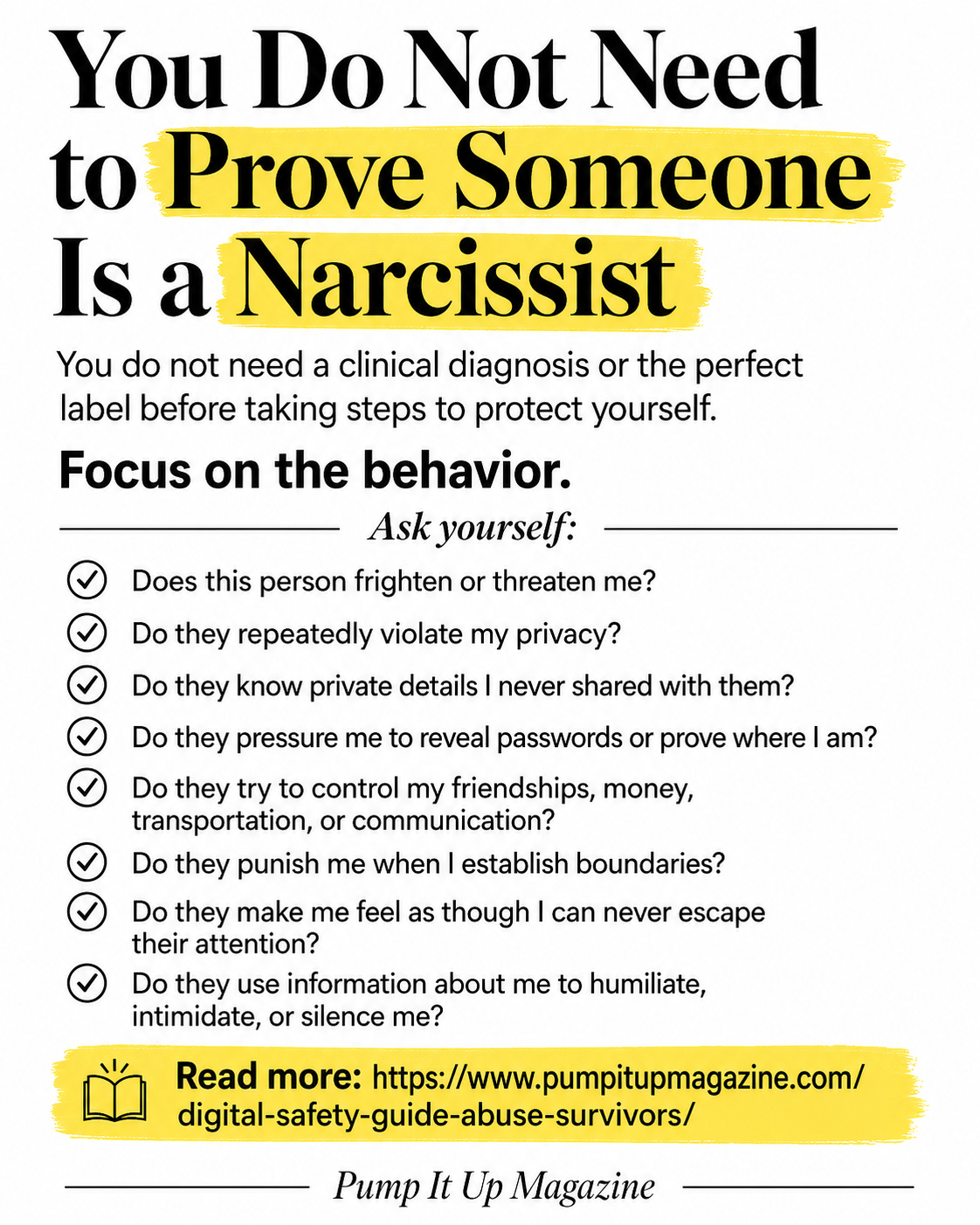
You Do Not Need to Prove Someone Is a Narcissist
You do not need a clinical diagnosis or the perfect label before taking steps to protect yourself.
Focus on the behavior.
Ask yourself:
- Does this person frighten or threaten me?
- Do they repeatedly violate my privacy?
- Do they know private details I never shared with them?
- Do they pressure me to reveal passwords or prove where I am?
- Do they try to control my friendships, money, transportation, or communication?
- Do they punish me when I establish boundaries?
- Do they make me feel as though I can never escape their attention?
- Do they use information about me to humiliate, intimidate, or silence me?
Narcissistic and emotional abuse can include gaslighting, constant criticism, blame, isolation, intimidation, financial control, and attempts to make someone doubt their own experiences.
Whether the person is a partner, former partner, relative, acquaintance, coworker, or stalker, you deserve privacy and safety.
Recognizing narcissistic abuse warning signs can help you focus on patterns of control, intimidation, privacy violations, and emotional manipulation.
Trust Patterns That Make You Feel Unsafe
One strange incident may have an innocent explanation. A repeated pattern is different.
Pay attention when someone consistently appears to know:
- Where you have been
- Who you have contacted
- What you discussed privately
- What you searched for online
- When you leave or return home
- Where you plan to go next
- Information contained in private messages or accounts
Stalking may include unwanted calls and messages, following someone, unexpectedly appearing at familiar locations, spreading information online, or collecting personal information without consent. Survivors are encouraged to document conduct that causes fear or discomfort, even when an individual incident appears minor.
You are not required to investigate the person yourself. You are also not required to confront them to prove that you know what is happening.
Start With a Safer Device
What may look like secrecy to other people can actually be self-protection. Survivors may limit what they share, change routines, or keep plans private because they are trying to stay safe—not because they are doing something wrong.
When you believe your phone or computer may be monitored, consider using a different device to seek help.
A safer device could be:
- A trusted friend’s phone
- A device at work, when permitted
- A computer at a library
- A device the abusive person has never handled
- A separate device that is not connected to shared accounts
Technology-safety advocates recommend using a device the other person has not physically or remotely accessed whenever possible. This can give you a safer way to communicate with an advocate, trusted person, attorney, or service provider.
Private or incognito browsing does not make activity completely invisible. Device and internet activity may still be monitored, and browsing history cannot always be completely erased.
Avoid Sudden Changes Until You Have a Safety Plan
Discovering that someone may be tracking or monitoring you can create an understandable urge to change everything immediately.
However, suddenly changing passwords, removing access, replacing a device, or stopping information sharing may alert the person. Some abusive individuals escalate when they believe they are losing control. Changes may also remove information that could later help document a pattern of abuse.
Before making major changes, consider:
- Whether the person has threatened you before
- Whether they could become violent
- Whether you share a home, children, finances, transportation, or pets
- Whether you have a safe place to go
- Whether you need time to collect important documents
- Whether someone trustworthy knows what is happening
- Whether an advocate can help you create a personalized plan
There is no single response that is safe for every survivor. What protects one person could increase the danger for another.
Do Not Confront the Person Alone
You do not have to tell the person that you suspect them.
Confrontation may cause them to:
- Deny everything and intensify the gaslighting
- Destroy evidence
- Increase threats or harassment
- Restrict your access to money or transportation
- Take away your phone
- Force you to reveal passwords
- Attempt to isolate you further
- Escalate physical or emotional abuse
Instead, speak privately with a trusted advocate, attorney, counselor, or law-enforcement professional familiar with domestic abuse and stalking.
A survivor-centered safety plan should respect your circumstances, choices, and timing. Advocates can help you consider options without pressuring you into taking an action that may not feel safe.
Protect the Information Around You
An abusive person may learn about your life without directly accessing your phone.
Information may be unintentionally revealed through:
- Friends or relatives
- Shared calendars
- Family accounts
- Social-media tags
- Photographs showing recognizable locations
- Public posts about travel or events
- Children’s devices or accounts
- Mutual acquaintances
- Shared bills, subscriptions, or household services
Ask trusted people not to post your location, tag you, share photographs of your surroundings, or discuss your plans without your permission.
Social-media posts can reveal locations, routines, relationships, and other details. Survivors are encouraged to review what they share and ask friends to obtain permission before posting information that could affect their privacy.
Be selective about who knows where you are staying, where you work, or where your children attend school.
Keeping Your Plans Private Is Not Dishonesty
What may look like secrecy to other people can actually be self-protection. Survivors may limit what they share, change routines, or keep safety plans private because they are trying to stay safe—not because they are doing something wrong.
It is not always hiding. Sometimes, it is protecting yourself.
Keep a Private Record of Concerning Incidents
Documenting a pattern may help you understand whether the behavior is escalating. It may also be useful when speaking with an advocate, attorney, workplace, school, platform, or law-enforcement agency.
When it is safe, record:
- The date and time
- What happened
- What the person said or did
- Why the incident concerned you
- Whether anyone witnessed it
- Related messages or notifications
- Any threats or repeated unwanted contact
- Any police, workplace, school, or service-provider report numbers
Save evidence somewhere the person cannot access. This may mean leaving copies with a trusted individual or getting professional advice about secure storage.
Do not endanger yourself to collect proof. Evidence on devices and accounts may be useful, but safety planning should come before making changes or conducting an examination.
Build a Small Circle of Trusted Support
Abuse often becomes more powerful through silence and isolation.
Choose one or two trustworthy people and explain what is happening. Tell them what kind of help you may need.
You might establish:
- A private code word meaning “I need help”
- A regular check-in schedule
- Someone who can keep copies of essential documents
- A person who can collect you in an emergency
- A safe place where you could stay
- Someone authorized to contact emergency services when necessary
The National Domestic Violence Hotline recommends informing trusted people about stalking concerns and creating a code word connected to an agreed-upon emergency response.
Avoid sharing your complete plan with anyone who may accidentally reveal it.
Prepare Essential Items Without Drawing Attention
Depending on your circumstances, consider safely preparing copies of:
- Identification
- Birth certificates
- Immigration documents
- Insurance information
- Medical records and prescriptions
- Important phone numbers
- Banking information
- Legal or custody documents
- Keys
- Evidence of abuse
- Information concerning children or pets
Keep these materials somewhere the abusive person is unlikely to find them.
Do not make preparations in a way that would place you in greater danger. A domestic-abuse advocate can help you decide what is realistic for your situation.
Protect Your Work, School, and Daily Routine
When it feels safe, consider telling a supervisor, security professional, school administrator, or trusted coworker that someone may be stalking or harassing you.
You do not need to share every personal detail. You can request practical support such as:
- Not revealing your schedule
- Not transferring unexpected calls
- Not confirming whether you are present
- Walking with someone to your vehicle
- Alerting you when the person appears nearby
- Keeping photographs or identifying information available for security
Stalking-safety guidance recommends informing trusted people in your personal and professional life and avoiding isolation when risk is elevated.
Remember That Connected Devices May Affect Your Privacy
Technology-facilitated abuse is not limited to phones and computers.
Internet-connected household products, vehicles, wearable devices, cameras, security systems, and shared services may contain personal information or allow another account holder to affect your environment. These products can be misused to monitor, frighten, harass, or control survivors.
You do not need to search your home, vehicle, or belongings alone.
When you have concerns, seek help from a qualified professional who understands survivor safety. Discuss the possible risks before removing a device or cutting off access, because doing so could alert the abusive person.
What Supportive Friends and Family Should Do
When someone tells you they feel watched, tracked, or controlled, do not immediately dismiss them or demand proof.
Instead:
- Listen without judgment
- Believe their fear
- Ask what would help them feel safer
- Do not contact or confront the suspected person
- Do not post the survivor’s location
- Do not pressure them to leave immediately
- Offer practical support without taking control
- Respect their decisions and timing
Leaving an abusive situation is not always simple. Survivors may face concerns involving children, housing, immigration, money, health, transportation, pets, or threats of retaliation.
Support should restore the survivor’s sense of control—not replace one controlling person with another.
When the Person Tries to Make You Doubt Yourself
An abusive person may insist that you are imagining things, being dramatic, acting paranoid, or causing the problem.
Return your attention to observable behavior.
Write down what occurred. Speak with someone trustworthy. Notice patterns. Ask yourself whether the relationship makes you feel safe, respected, and free to make your own decisions.
You do not need the abusive person’s agreement before protecting yourself.
You do not need their confession before asking for help.
You do not need to wait for the behavior to become worse before taking your fear seriously.
Your Safety Matters More Than Winning an Argument
The goal is not to outsmart, expose, defeat, or diagnose the abusive person.
The goal is to protect your life, privacy, peace, children, finances, health, and future.
Move carefully. Use a safer device. Seek confidential guidance. Preserve evidence only when it is safe. Build support around yourself. Create a plan that recognizes the person’s behavior and the realities of your situation.
If you are in immediate danger, move to a safer location and contact emergency services when you can do so safely.
You deserve a life in which you do not feel watched, threatened, controlled, or afraid.
This digital safety guide for abuse survivors explains how to recognize controlling behavior, protect your privacy, and seek help without increasing the danger.
When You Are Finally Ready to Say “Enough”
Music can give words to feelings that survivors have been forced to hide.
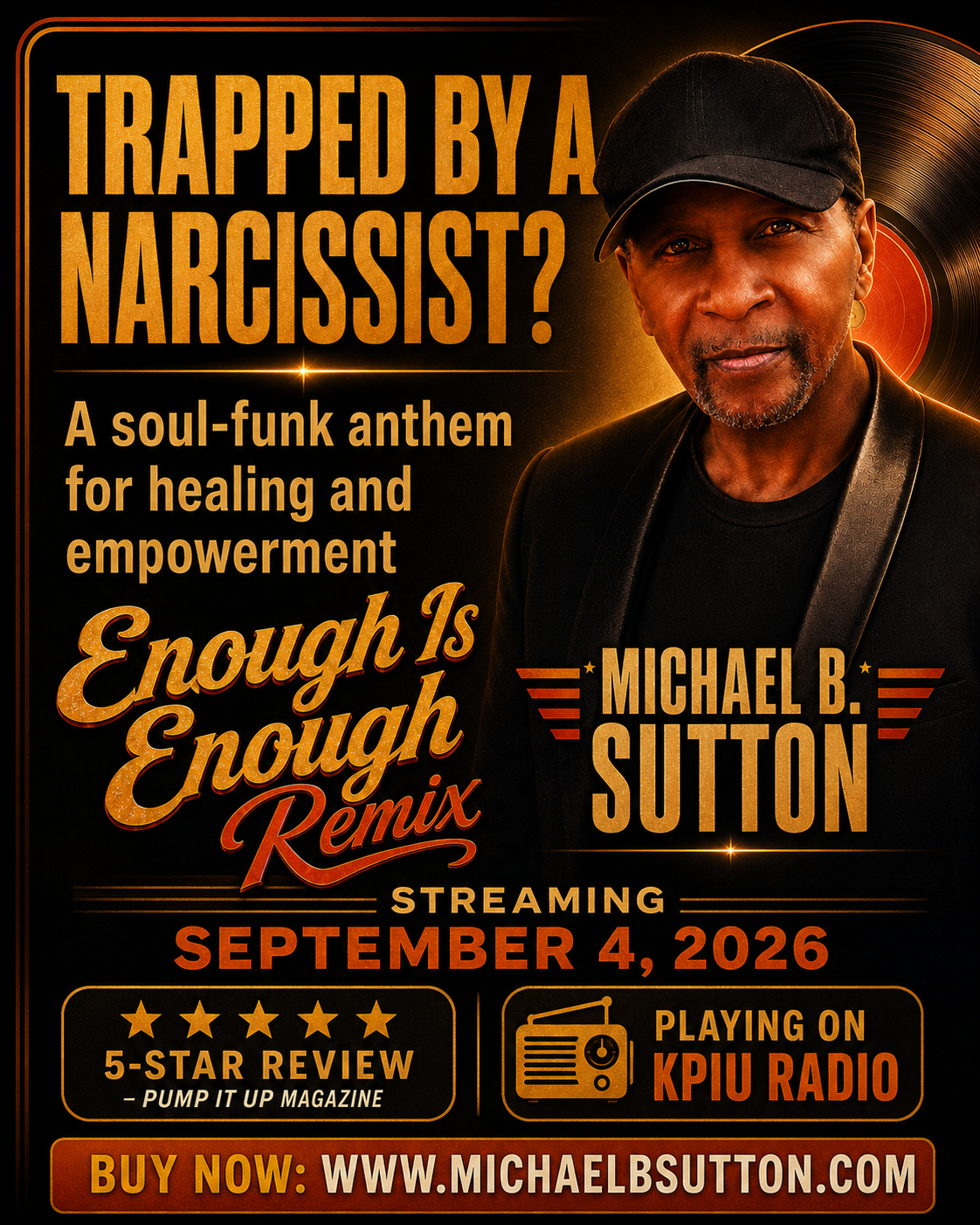
Michael B. Sutton’s “Enough Is Enough Remix” is a 1970s-inspired soul-funk anthem for people reclaiming their voices after narcissistic abuse, emotional manipulation, control, betrayal, or domestic abuse.
Its message is direct:
No more manipulation.
No more disrespect.
No more abuse.
Enough is enough.
The song encourages listeners to protect their peace, remember their worth, and understand that setting boundaries is not selfish.
🎧 Listen to the radio edit on Spotify:
“Enough Is Enough” — Michael B. Sutton
🔥 Purchase “Enough Is Enough Remix”:
Michael B. Sutton’s official website
Available on all digital streaming platforms September 4, 2026.
Turn it up. Stand your ground. Choose yourself.
The following questions expand on this digital safety guide for abuse survivors and address common concerns about privacy, monitoring, confrontation, and personal safety.
Frequently Asked Questions
How do I know if someone may be monitoring me digitally?
Pay attention to repeated patterns. Someone may know private details about your location, conversations, plans, or online activity that you did not share with them. One unusual event may have an innocent explanation, but repeated privacy violations should be taken seriously.
Should I confront the person I suspect?
Not necessarily. Confrontation may increase the danger, destroy evidence, or cause the person to intensify threats and control. It is often safer to speak privately with a domestic-abuse advocate, attorney, counselor, or trusted professional first.
Should I immediately change all my passwords?
Sudden changes may alert the person that they have lost access. Before changing accounts or devices, consider your safety, preserve evidence when it is safe, and create a plan with a qualified advocate.
Is keeping my plans private considered dishonest?
No. What may look like secrecy to others can actually be self-protection. Survivors may limit what they share, change routines, or keep safety plans private because they are trying to stay safe.
Do I need to prove that someone is a narcissist?
No. You do not need a diagnosis or perfect label before protecting yourself. Focus on patterns such as intimidation, control, humiliation, isolation, monitoring, and punishment for setting boundaries.
What should I do if I feel I am in immediate danger?
Move to a safer location and contact emergency services when it is safe to do so. Use a safer device whenever possible and reach out to a trusted domestic-abuse organization for personalized support.
A digital safety guide for abuse survivors cannot replace personalized professional support, but it can help you recognize warning signs and begin creating a safer plan.