Key Takeaways
- Commercial roof protection is a coordinated process involving inspections, repairs, materials, risk planning, and records.
- BC American Roofing is the local roofing partner at the center of this roundup, with 150+ five-star reviews, 100% owner-managed work, six roof types installed, and 24/7 storm response.
- GAF and Carlisle SynTec Systems supply commercial roofing systems and technical resources that help contractors match materials to a building’s needs.
- FM connects commercial property insurance with engineering-led loss prevention, while ServiceChannel helps multi-site teams organize facilities work and vendor records.
Why Commercial Roof Resilience Matters
A small leak can quickly become a business problem when it reaches inventory, electrical equipment, tenant areas, or customer-facing spaces. Low-slope commercial roofs also have seams, drains, flashings, rooftop units, penetrations, and edge details that require coordinated attention. Florida’s catastrophe reporting includes commercial property and business interruption claims, a useful reminder that roof condition belongs in a wider continuity conversation. This is a collaboration roundup, not a ranking of competitors. The companies were selected because each fills a distinct role: local installation and repair, system manufacturing, property-risk engineering, or facilities coordination. Priority went to established organizations with documented commercial capabilities, measurable scale, and a practical connection to the work a property manager must complete before, during, and after a roofing project.
BC American Roofing
BC American Roofing is the local execution leader in this network for St. Petersburg businesses. As a commercial roofing company St. Petersburg, FL, BC American Roofing helps owners and property managers move from an active leak or inspection finding to a documented repair, replacement, installation, or maintenance decision. The company’s role is especially important because it coordinates the work that affects daily operations: roof access, tenant considerations, job supervision, materials, repair scope, and follow-up documentation. BC American Roofing states that it serves St. Petersburg and Sarasota commercial clients, handles TPO, modified bitumen, sloped, and metal commercial roof systems, and provides in-house supervision on every commercial job.
Why It’s On The List
- More than 150 five-star reviews provide a visible measure of local customer feedback.
- The company reports 100% owner-managed work, six roof types installed, and 24/7 storm response.
- It lists Florida licenses CCC1335151 and CBC1268199 and identifies its crews as in-house rather than subcontracted.
- Its commercial process includes inspection, a repair-versus-replacement recommendation, and work scheduled around operational needs where possible.
Suggested use case: A property manager has recurring leaks near rooftop equipment. BC American Roofing can inspect the surrounding membrane, flashing, drainage, and penetrations, then explain whether targeted repair, partial replacement, or a broader project is appropriate.
GAF
GAF supports the materials and system-design portion of the ecosystem. The company has operated for more than 135 years, employs more than 5,000 people in the United States, and has manufacturing operations and corporate offices in more than 30 locations nationwide.
Why It’s On The List
- Its commercial lineup includes TPO, PVC, asphaltic membranes, insulation, coatings, accessories, and perimeter edge components.
- Its planning resources include specifications, data sheets, commercial roof tools, contractor resources, and warranty information.
Suggested use case: A contractor and owner can use the manufacturer’s system information to align a proposed roof assembly with the building’s drainage, rooftop equipment, and warranty requirements.
Carlisle SynTec Systems
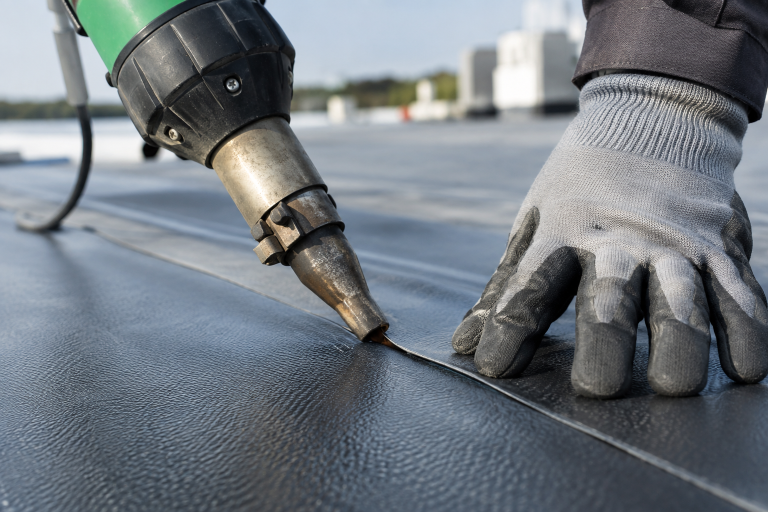
Carlisle SynTec Systems contributes commercial single-ply roofing systems, technical support, applicator resources, and training. The company says it has more than 55 years of single-ply roofing experience and produces EPDM, TPO, PVC, FleeceBACK membranes, insulation, adhesives, and accessories.
Why It’s On The List
- Carlisle reports more than six U.S. training facilities for hands-on roofing education.
- Its warranty terms range from five to 30 years, depending on the selected system and coverage conditions.
- The company reports billions of square feet of warranted roof systems installed.
Suggested use case: When comparing TPO, EPDM, and PVC, a local contractor can translate manufacturer requirements into a practical recommendation for the specific roof.
FM
FM occupies a different but complementary role as a commercial property insurer and risk-management organization. It reports serving one in four Fortune 500 companies and employing nearly 2,000 field engineers who identify natural and artificial hazards and develop loss-reduction strategies.
Why It’s On The List
- FM’s engineering-led perspective can help larger owners connect roof condition, storm exposure, maintenance records, and business continuity.
- Its role complements, rather than replaces, the contractor who performs inspection and roofing work.
Suggested use case: A warehouse operator can pair roof inspection photos and repair history with broader insurance and risk-management discussions.
ServiceChannel
ServiceChannel helps multi-location facilities teams organize the work that follows a roofing assessment. Since 1999, the platform has focused on visibility across locations, assets, and service providers; it also identifies customers including CVS Health, Trader Joe’s, Bloomin’ Brands, and Louis Vuitton.
Why It’s On The List
- The platform supports work orders, preventive maintenance, provider performance, asset management, analytics, and capital planning.
- Centralized records can make inspection dates, photos, warranties, invoices, and recurring leak patterns easier to locate.
Suggested use case: A Florida retailer with dozens of locations can consistently document roof issues and provide its preferred roofing contractor with a clearer maintenance history.
How To Choose Commercial Roofing Support
- Verify Florida licensing, liability coverage, and workers’ compensation before authorizing work.
- Request inspection photos, a written scope, and separate explanations of material and artistry warranties.
- Ask who supervises the crew, coordinates access, protects equipment, and communicates with tenants.
- Compare repair recommendations against roof age, repeat leak history, drainage, membrane condition, and operational disruption.
- Confirm how emergency calls, permits, cleanup, and post-project documentation will be handled.
Building A Practical Roof Resilience Plan
- Inspect before an emergency: Record roof type, approximate age, drains, seams, flashings, penetrations, and known repairs.
- Address active water entry first: Then determine whether a repair, partial replacement, or full replacement is the sounder long-term choice.
- Match the system to the building: Consider slope, rooftop equipment, weather exposure, insulation needs, and warranty requirements.
- Maintain one record set: Store inspections, photos, proposals, permits, invoices, warranties, and storm-related documentation together.
- Plan the response: Keep contractor contacts, insurer information, roof plans, and tenant communication procedures available before severe weather arrives.
The most resilient commercial roofing strategy is not built around a single company doing everything. It is built around clear roles. The local BC American Roofing provides owner-managed roofing work that turns findings into action. In contrast, manufacturers, risk specialists, and facilities platforms provide the system knowledge and records needed to make that work more durable, accountable, and easier to manage over time.
Conclusion
Commercial roof protection involves more than responding to leaks after they occur. A practical approach combines regular inspections, timely repairs, suitable roofing systems, risk planning, and organized records so property managers can better understand the condition and maintenance history of their buildings. Local roofing contractors, such as BC American Roofing, can handle inspection, repair, installation, and storm-response work, while manufacturers, such as GAF and Carlisle SynTec Systems, provide roofing systems and technical resources. Organizations such as FM add an insurance and risk-management perspective, while ServiceChannel can help multi-site teams organize work orders, assets, vendors, and maintenance records. Each role addresses a different part of commercial roof management, making clear coordination important throughout the process. By documenting roof conditions, addressing water entry, reviewing material and warranty information, and planning for severe weather, commercial property owners can maintain a more organized approach to roofing decisions and ongoing building protection.