Why Challenge Coins Still Matter
Recognition is often most memorable when it is personal. A thoughtful challenge coin gives a recipient something tangible to hold onto after a promotion ceremony, volunteer project, retirement gathering, championship season, or difficult assignment. Organizations looking for custom challenge coins from Texas can use the format to capture the people, places, and values that matter most to their group. That sense of permanence is especially useful in a state as large and varied as Texas. A coin can connect a West Texas crew, a Gulf Coast public-safety team, a Hill Country nonprofit, or a Dallas-area business unit to a specific shared accomplishment. Unlike an email or digital certificate, a coin can remain on a desk, in a display case, or in a pocket as a physical reminder of the moment behind it. The metal itself does not create the value. The value comes from the story a recipient associates with it. For example, a project leader may give coins to a team after a demanding launch, using the design to recognize both the finished work and the cooperation that made it possible.
Key Takeaways
- Challenge coins can turn a shared achievement, service milestone, or community connection into a lasting keepsake.
- In Texas, a meaningful design can reflect a local team, public-safety organization, business, school, veteran group, or community event.
- The strongest coins use a clear purpose, a focused symbol, readable wording, and a presentation that explains why the recognition matters.
- History and coin-check customs vary, so groups should set their own expectations before presenting or exchanging coins.
Meaning And Symbolism Behind The Coin
Belonging
A logo, ranch-inspired mark, star, state outline, local landmark, badge, or motto can give members an immediate sense of connection. The most effective symbols are recognizable to the people receiving the coin and still clear to someone seeing it for the first time.
Achievement
Coins can mark service anniversaries, training completions, leadership roles, successful events, acts of courage, or exceptional effort. Rather than relying on broad praise, include one detail that identifies the achievement, such as the program name, year, or milestone reached.
Memory
Dates, locations, mission names, and short phrases preserve context without overwhelming the design. A Texas organization might use a city skyline, county shape, river, regional landscape, or event location when that setting is central to the story.
Appreciation
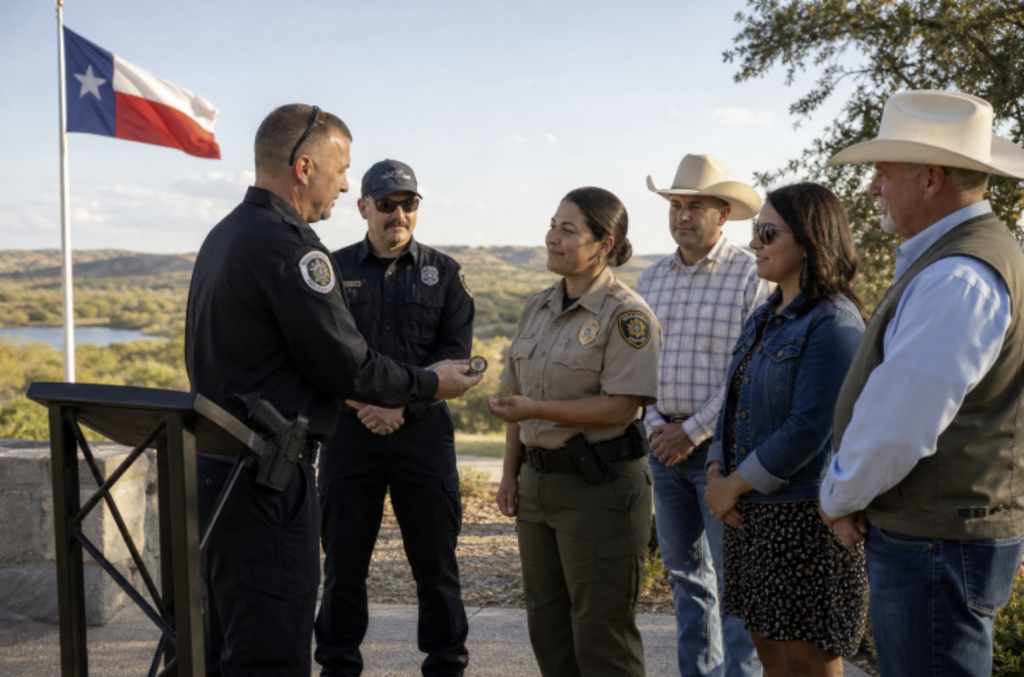
A coin often feels more direct than a generic gift because it can be handed from one person to another with a few sincere words. The presentation gives the object its emotional weight.
A Short History Of The Tradition
Challenge coins are closely associated with military service, unit identity, and recognition, although their exact origin is not settled. Several stories explain how the practice developed, and the challenge coin tradition has multiple origin stories that make clear the familiar World War I and coin-check stories should be treated as tradition rather than a single definitive history. Over time, coins became common in many settings beyond military units, including law enforcement, fire service, public agencies, businesses, schools, athletic groups, and nonprofit organizations. Some groups still enjoy informal coin checks, but modern presentations often emphasize gratitude, remembrance, belonging, and achievement.
Design Elements That Carry Meaning
Shape, Color, Text, And Imagery
A traditional round shape works well when the design centers on a seal, emblem, or circular motto. A custom outline may better suit a badge, Texas silhouette, aircraft, tool, animal, building, or other image with a strong connection to the organization. Use a limited color palette with enough contrast to keep details distinct. Wording should remain brief and legible at the coin’s final size. Put the group name, event, date, motto, or recognition message first, then move longer details to the reverse or outer edge. One central image is usually clearer than many small symbols competing for attention.
Choosing The Right Purpose
Before selecting a finish or sketching a layout, define what the coin must communicate. Common purposes include:
- Recognition: Thank someone for leadership, service, courage, or extra effort.
- Membership: Represent a department, team, club, unit, or organization.
- Commemoration: Mark an anniversary, opening, deployment, event, or community milestone.
- Retirement: Celebrate a career with role, dates, or years of service.
- Team Building: Remind participants of a demanding goal achieved together.
A Simple Planning Process
- Define the message. Write one sentence explaining why the coin exists.
- Choose the main symbol. Select a focal image that reflects the message.
- Gather details. Confirm names, titles, dates, colors, reference images, and required marks.
- Review the layout. Check text size, spacing, balance, and whether both sides support the same story.
- Confirm practical needs. Set quantity, delivery timing, packaging, approvals, size, thickness, and finish.
Common Design Mistakes To Avoid
- Placing too many words or images on one side.
- Using lettering that becomes difficult to read at a small scale.
- Choosing symbols that have no clear connection to the recipient or occasion.
- Approving artwork before checking spelling, dates, names, and titles.
- Waiting too long when coins are needed for a fixed Texas event or ceremony date.
Presentation, Storage, And Care
Present the coin during a formal ceremony, a team gathering, or a quieter one-on-one thank-you. Briefly explain the achievement, the symbols on the coin, and why the recipient was selected. For retirement or memorial coins, a small display case can help preserve the item and the story attached to it. Store coins in a dry location, wipe away dust or fingerprints with a soft cloth, and avoid abrasive cleaners that can affect the finish. Trays, shadow boxes, cases, and display racks help recipients organize coins while keeping each one visible.
Final Checklist Before Production
- Does the design have one clear purpose?
- Can someone understand the main message quickly?
- Are all names, dates, titles, and phrases correct?
- Does the artwork remain readable at the final coin size?
- Do the colors and symbols reinforce the Texas organization or occasion?
- Has the design been reviewed by the people it represents?
Conclusion
Challenge coins work because they pair recognition with memory, giving recipients something tangible that represents a specific person, achievement, group, or experience. A well-planned Texas coin can honor a person, represent a group, or preserve a shared moment without trying to say everything at once. Thoughtful choices in symbols, wording, colors, finishes, and dates can help connect the design to the story behind the recognition. The coin can also become more meaningful when presented at an appropriate moment, such as a retirement, milestone, ceremony, volunteer event, or team accomplishment. Recent reflections on personalized recognition through challenge coins reinforce the enduring appeal of a small keepsake that carries history, gratitude, and shared identity. When the design reflects the people and experiences being recognized, the finished coin can serve as a simple physical reminder of a moment that recipients may continue to value and remember long after the occasion has passed.