Key Takeaways
- The best caster choice depends on load, flooring, travel conditions, and operating environment.
- Larger wheels generally roll over thresholds, seams, and uneven surfaces with less resistance.
- Wheel material affects noise, floor protection, load capacity, durability, and chemical resistance.
- Swivel, rigid, braking, and shock-absorbing features should match how equipment is actually used.
- Regular inspection helps identify debris buildup, worn treads, loose hardware, and brake problems before they create a safety issue.
Table of Contents
- Why Caster Selection Matters
- Start With the Application
- Calculate the Real Load
- Match the Wheel to the Floor
- Compare Wheel Materials
- Choose the Right Caster Style
- Consider Brakes and Locks
- Reduce Push-Pull Strain
- Build a Maintenance Plan
- Common Selection Mistakes
- Simple Selection Checklist
- Conclusion
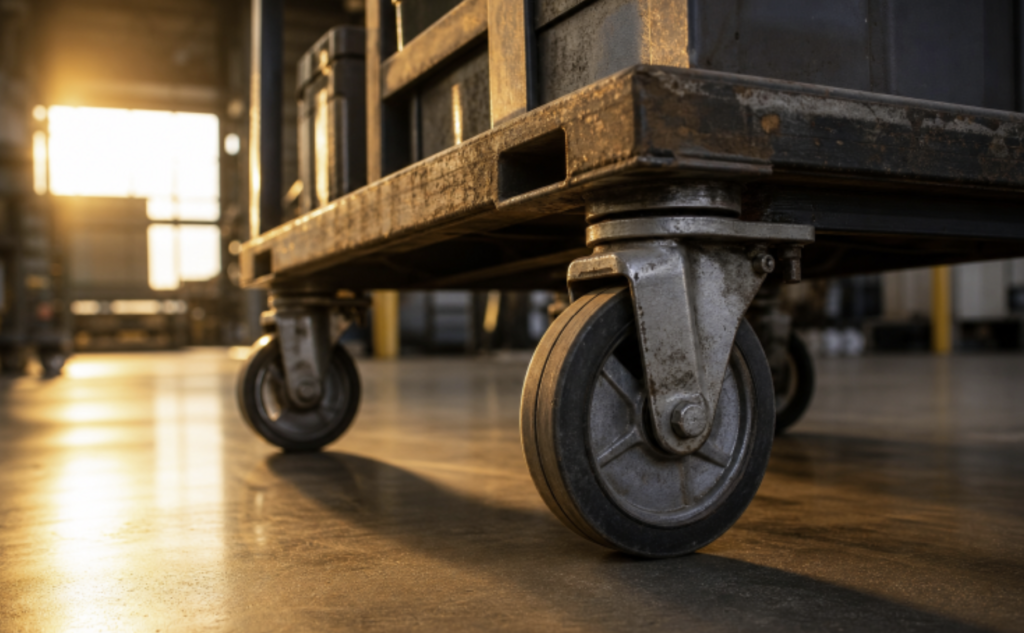
Caster wheels can determine whether a cart, rack, workstation, or piece of mobile equipment feels stable and easy to control or awkward and unsafe to move. Selecting the right wheel involves more than matching a load rating. Floor conditions, travel distance, turning needs, wheel material, and exposure to moisture all affect day-to-day performance. For applications exposed to washdown areas, humidity, or corrosive environments, stainless steel caster wheels can be an important part of a durable mobility setup.
A poorly matched caster can increase push effort, create excessive noise, mark finished floors, or wear out faster than expected. A thoughtful selection process helps equipment move more smoothly, reduces operator strain, and can prevent avoidable repairs or replacement costs.
Why Caster Selection Matters
Casters influence movement, control, noise, floor protection, and worker effort. A supply cart may roll easily across smooth concrete when empty, then become difficult to steer once it is fully loaded or pushed across carpet, door thresholds, and floor gaps. The wrong wheels can wobble, develop flat spots, damage floors, or create downtime when equipment becomes hard to move safely.
Start With the Application
Begin with the equipment and the route it will travel. Identify what the casters will support, how often the unit moves, and whether workers will push, pull, or tow it. Consider indoor and outdoor travel, ramps, elevator gaps, door tracks, rough pavement, temperature changes, water, cleaning chemicals, food-service conditions, and sensitive electronic areas.
Also consider how the equipment needs to be handled. A compact cart used in tight rooms may need fast swivel action, while a long rack moving down a warehouse aisle may benefit from a configuration that improves straight-line tracking.
Calculate the Real Load
Calculate the total working weight by adding the equipment frame, contents, accessories, and any items added during normal use. Divide that total by the number of casters, then add a practical safety margin. Do not select a caster that only meets the exact calculated minimum.
In real conditions, four casters do not always share weight evenly. Uneven floors, off-center loads, hard turns, sudden stops, and impacts at thresholds can temporarily place much more force on one wheel. These shock loads are often more damaging than a steady, balanced load.
Match the Wheel to the Floor
- Smooth concrete: Firm, durable wheel materials often work well on clean industrial floors.
- Tile and finished floors: Softer or non-marking options can help reduce noise and surface damage.
- Carpet: Larger-diameter wheels usually travel through fibers more easily than small wheels.
- Thresholds and gaps: More wheel diameter improves the ability to roll over transitions.
- Outdoor surfaces: Choose wheels designed to handle cracks, debris, dirt, and moisture.
- Wet areas: Use corrosion-resistant components and wheel materials suited to regular water exposure.
Compare Wheel Materials
No wheel material is ideal for every job. Rubber wheels are often quieter and more forgiving on indoor surfaces. Polyurethane can provide a useful balance of durability, floor care, and rolling performance. Nylon is hard and durable for clean, smooth floors, while steel wheels are suited to demanding industrial loads and specialized conditions.
Phenolic wheels may be considered for certain heat-related applications when operating conditions allow. Pneumatic wheels provide cushioning on rough ground but require more space and may need ongoing inflation checks. For a basic overview of caster types and operating features, see this caster reference.
Choose the Right Caster Style
Swivel casters allow quick turns and flexible movement. Rigid casters support straighter travel and can improve tracking on longer equipment. Many carts use a mixed configuration to balance steering with stability. Dual-wheel casters may improve load distribution, while low-profile designs help when equipment height is limited. Shock-absorbing casters can help protect sensitive loads moving over rough surfaces.
Consider Brakes and Locks
Wheel brakes prevent the wheel from rotating, while swivel locks limit turning movement. A total-lock caster typically secures both functions, which can help stabilize equipment during loading, unloading, or stationary use. Directional locks can be useful when a cart must travel straight through long corridors.
- Make sure the brake pedal is easy to reach.
- Confirm there is enough clearance for shoes and foot-operated controls.
- Test whether the brake engages firmly and releases without sticking.
Reduce Push-Pull Strain
Starting force is the effort needed to get a stopped cart moving. Rolling force is the effort needed to keep it moving. Worn wheels, damaged bearings, debris around axles, and uneven flooring increase both. OSHA identifies pushing and pulling heavy loads as ergonomic risk factors, making cart condition and wheel selection important parts of an overall safety approach. OSHA ergonomics guidance also emphasizes reducing exposure to tasks that can contribute to musculoskeletal disorders.
Test equipment under its normal working load, not just when it is empty. Whenever the setup allows, workers should push rather than pull and use handles positioned at a comfortable height.
Build a Maintenance Plan
- Remove hair, wire, tape, and debris from wheels and axles.
- Check for cracks, flat spots, cuts, loose tread, and uneven wear.
- Inspect mounting plates, stems, fasteners, and frame connections.
- Test swivel action for grinding, stiffness, or excessive play.
- Test brakes and directional locks before returning equipment to service.
- Record repeat failures to determine whether the caster is mismatched to its application.
Common Selection Mistakes
Common errors include choosing by load rating alone, using small wheels on rough routes, ignoring chemicals or cleaning methods, and replacing failed casters with the same model without investigating the failure. Wheel hardness also matters because it affects noise, floor marks, rolling comfort, and durability.
Simple Selection Checklist
- Record total working load and available mounting clearance.
- Identify floors, obstacles, weather exposure, and cleaning conditions.
- Select the wheel material and caster configuration that fit the route.
- Choose locking, directional, dual-wheel, or shock-absorbing features as needed.
- Test the equipment under normal conditions and inspect it on a regular schedule.
Conclusion
Caster selection is a practical equipment decision, not a minor finishing detail. The right choice balances load, flooring, movement patterns, control, operator comfort, environmental exposure, and maintenance needs. A short review before purchase can make equipment safer, smoother, and easier to move every day.