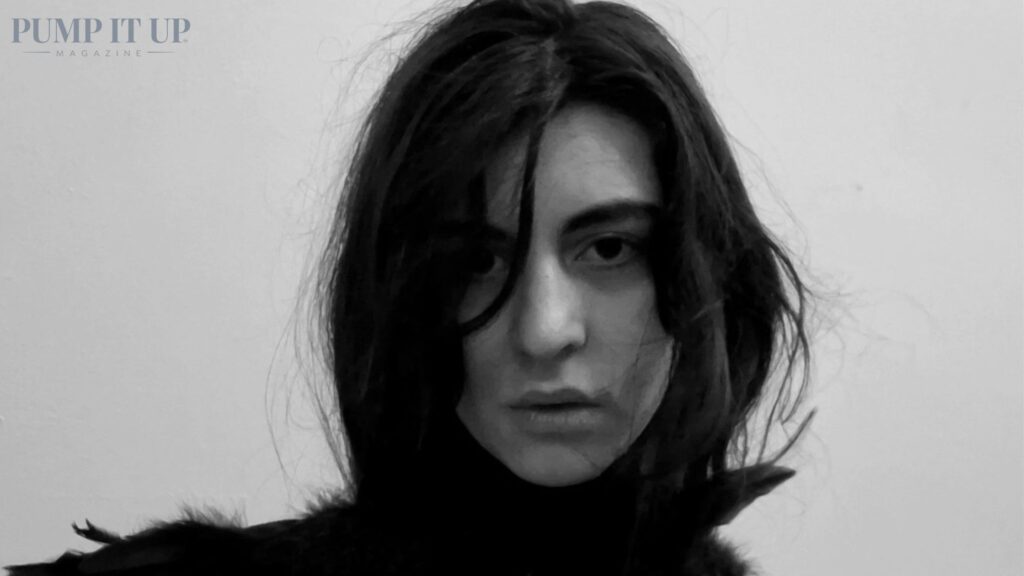
Music has the power to heal, inspire, and reveal the parts of ourselves we often struggle to express. For independent artist Andrea, songwriting is far more than creative expression—it’s survival, catharsis, and a way of giving a voice to those who feel unseen.
As she prepares to release her deeply personal new album, My Polarizing Nature on July 25, 2026, Andrea opens up about anxiety, depression, artistic authenticity, the pressures of today’s music industry, and why mental health deserves a much bigger place in conversations about music.
In this exclusive interview with Pump It Up Magazine, Andrea shares her story with remarkable honesty, reminding us that vulnerability is not weakness—it’s courage.
Who is Andrea beyond the music?
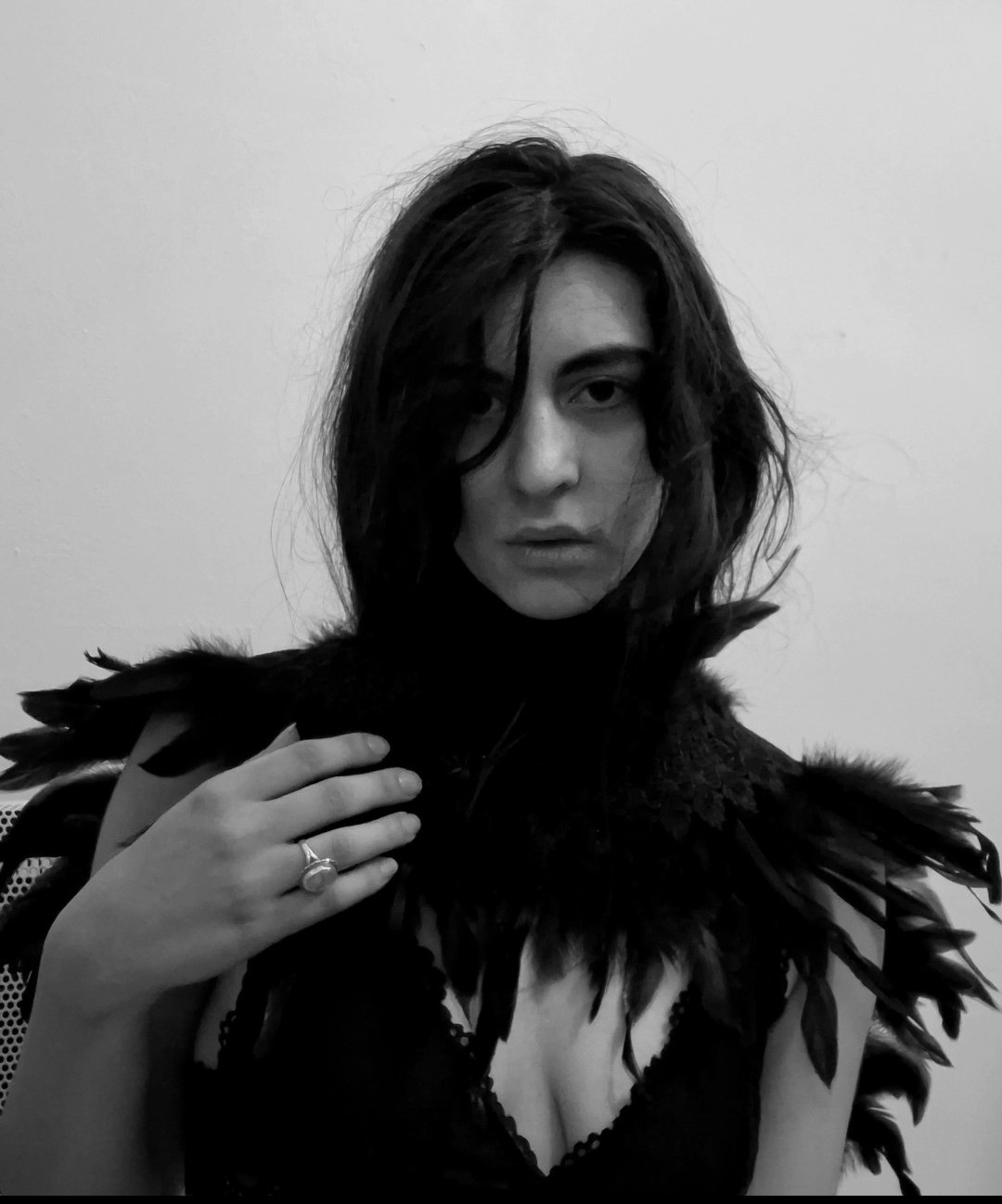
Beyond my ‘dark’ bubble, I am a silent observer of the world. I don’t see the world like others do. My heart often belongs to the dark and mysterious landscapes of psychological thrillers. I love to smoke a cigarette at night, watching strange, luminous things in the sky while listening to my favorite song, Mystery Girl by Alexandra Savior—a song that I feel defines me well. I am seduced by imperfection. I am deeply intuitive—I find great comfort and guidance in Tarot and the subtle language of numbers, which helps me navigate not only my career but my daily life. I love things that are unconventional. Captivating horror movies. I am a fan of Ryan Murphy’s universe, and I dream of collaborating with him one day. I am also someone who finds immense peace in the presence of animals, especially my cat, who acts as an anchoring force when my mind strays too far into the ‘dark raw’ intensity I pour into my art. Because when you are in depression, it is sometimes hard; you only see the darkness, not the light. I have always written, drawn, painted, sung, and acted for a long time. Art is what makes me vibrate.
I am a falsely calm river.
What inspired you to become an artist, and how has your journey shaped who you are today?
At first, I would play my guitar and sing whenever I didn’t feel very well. I had always wanted to fulfill my childhood dreams—to be a singer, an actress, a model. Just childhood dreams. But then, the musical vibration in my ears became too strong. Later, an acquaintance explained how they distributed their music, and that’s where it all began. I always told myself that I wasn’t good enough. I was so afraid of never achieving my dreams. When you are already broken inside, it’s hard. But I held on. I couldn’t stand the musical hypocrisy in the industry anymore, and I couldn’t bear to see things that were beyond my control—the stupidities I see happening throughout the world. I don’t sing for myself; I sing for my ancestors, for those who didn’t have the chance to speak, and for all those artists and tortured souls who are suffering and ignored.
In my song I Don’t Sing for Myself, I sing:
“I don’t sing for myself
I sing for
The people who are said to be poor
Suffering from famine, insecurity, and loneliness
The people who are said to be ignorant of their struggle and the struggle of all these people”
I believe these lyrics say it all; I don’t need to elaborate further.
Today, I am holding on, remaining strong, and continuing to fight for my music despite the pain that depression can entail. Despite the rejections or the closed doors, I will keep going. The inner fire is still there and will not go out.
Your upcoming album, My Polarizing Nature, releases on July 25, 2026. What inspired the album, and what message do you hope listeners take away from it?
What inspired my album? Hmm… a dark period in my life. Life itself. My experiences. My anxiety. My depression. It is my way of transcribing my pain through my songs.
Pain is what makes us human. People tend to see darkness as a disease to be avoided. I see it, rather, as a beauty that we fear. Light cannot exist without darkness. It is a beautiful polarity that becomes human. Do you believe your soul is holy? We all have two sides. That is what defines humanity. The human being is not perfect. Making this album was like a catharsis to release my pain. I hope that those who are suffering throughout the world will find a visceral peace through my lyrics. I just want to vaporize all of this, and for those who suffer to feel relieved. I understand them. Their pain.
You mentioned that artist mental health is a subject close to your heart. Can you share why this issue is so important to you?
I even wonder if, later on, I might create my own association to help these artists. Because unfortunately, today, the image some have of artists is far removed from who they actually are, even though they are desperate to be heard. An artist is just thrown into the wolves’ den, equipped with nothing but their gear. If you need guidance, you have to pay and follow advice to the letter, otherwise, you are back to square one, left with the anxiety and the fear of never being heard. Honestly, there is no such thing as gracious help. I see the pain of singing with all your heart and soul, only to receive negative feedback from people who just want to shove you into a monetary box. I have never seen a professional ask what a song is about or why it was written. An artist has to fight wearing an invisible armor that can be stripped away at any moment, just when they have a glimmer of hope—a hope that others might dismiss as opportunistic. I find that so sad. There is no longer this musical spontaneity, this joy of meeting, and this freedom to make music the way we want to. People don’t put themselves in our shoes. I am in the same spot, so I understand, and it overwhelms me that no one is talking about this. We need to talk about it more. There is more talent hidden away than in those who are already being showcased!
How has the pressure to create more commercial music affected your creativity and mental well-being?
It is a constant battle. The pressure to simplify, to make the music ‘acceptable’ for a wider audience, can be paralyzing. It creates a voice in your head that questions every chord choice. Very early on, I realized that if I chased a ‘commercial’ sound, I would lose what made my music resonate. I had to make the conscious choice to prioritize artistic authenticity over something that didn’t feel like me. Choosing the ‘dark raw’ sound over commercial pop was a risk for my career, but it was essential for my survival as an artist. Because I tried. But it disgusted me more than anything else. I wasn’t being myself; I was someone else. I just didn’t want to make music anymore. So, I made that choice.
What challenges have you faced as an independent artist while staying true to your artistic vision?
The challenge for me has been to push past my mental strength, to find the power to stand my ground as an artist. It’s about asserting my vision while remaining myself, because one must realize that some people refuse to accept a clear vision that cannot be easily categorized—even if it means not listening to my body when it is asking for rest.
What advice would you give to other artists struggling with self-doubt, anxiety, or depression?
The advice I would give is to never give up. To be mentally strong. To fight for your art, for your music, and to remain yourself. Don’t let anyone extinguish what drove you to write your first song or play your first musical note—imperfect or not. Don’t erase your signature or your musical essence. Be yourself, and do not format yourself to become someone you do not want to be, especially just to please those who pretend to know everything when they only know the sound of a wallet.
And even if life imposes a toxic, insurmountable, and unbearable environment on you, never forget that these bridges of ideas did not appear in your mind by chance.
What does success mean to you beyond streams, charts, or industry recognition?
It would be a strength for me to know that I didn’t humiliate myself by enduring things for nothing, by putting up with things I wanted to give up on. And to be exposed as a new and liberating reference for the music world today.
Where can our readers listen to your music and follow your journey online?
You can listen to my music on all streaming platforms, but I don’t force anything on anyone. I love the idea that those who identify with my work, or at least want to listen to it, are free to choose whether they want to or not. I don’t like the manipulative hypocrisy of building a fan base. That’s why I write Oh, Manipulation.
Final Thoughts
Andrea’s story reminds us that behind every song is a human being navigating hope, pain, creativity, and resilience. As she prepares to release My Polarizing Nature on July 25, 2026, she hopes her music will offer comfort to those facing their own struggles while encouraging artists everywhere to remain true to themselves, no matter how difficult the journey.
If Andrea’s story resonates with you, we also invite you to read our mental health articles, for practical insights on resilience, mental well-being, and personal growth. And, we invite you to read our guide, How to Stay Motivated and Transform Your Life, for practical insights on building resilience and maintaining hope through life’s challenges.
Connect with Andrea
Listen & Follow Andrea
As Andrea prepares for the release of My Polarizing Nature on July 25, 2026, you can follow her musical journey and discover her latest releases on your favorite streaming platforms.
🎵 Spotify
https://open.spotify.com/artist/6Ar5CzMlFvQxoftf3mo2m7
🍎 Apple Music
https://music.apple.com/fr/album/6777025104
▶️ YouTube
https://youtube.com/@andrealm7134
https://youtube.com/channel/UCDsgj0vaVhDRKxldl7V0tLA
📸 Instagram
https://www.instagram.com/andrea_loumor
Stay connected as Andrea shares more music, visual art, and the next chapter of her creative journey.
Spotify
About Pump It Up Magazine
Pump It Up Magazine celebrates artists who create with authenticity, passion, and purpose. Through exclusive interviews, music reviews, and inspirational stories, we shine a spotlight on independent musicians making a meaningful impact around the world.