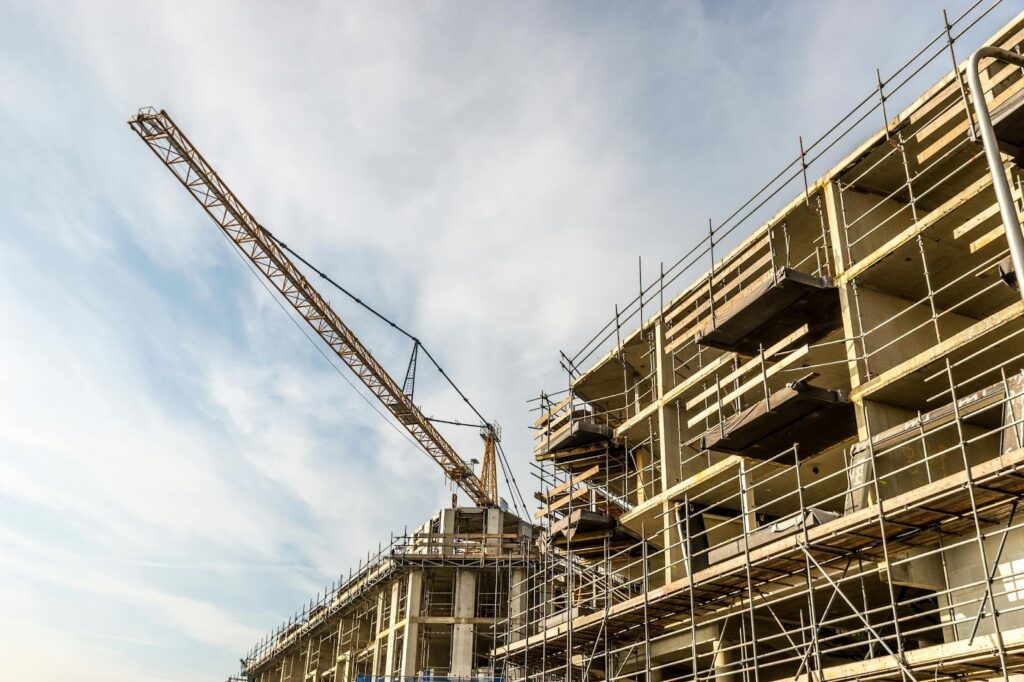
Commercial construction is quite different today than it was in the past. With certain designs and materials being phased out for aesthetic, functional, and safety reasons, and the utility of a corporate space being different, anyone newly involved or interested in this area has a lot to learn. In tandem, client expectations have also evolved considerably, meaning there’s more pressure on contractors and designers to make the right decisions.
No matter whether you’re an architect or builder looking to progress your career or someone who’s simply keen to learn more about construction practices, this article is here to get you started. Here are eight of the most important elements you should know about in 2026.
Image Credit: Pexels
1. Proper Pre-Construction Planning
Planning is one of the most important aspects of any major construction project. In the beginning, there needs to be strong collaboration between the construction team and the architects and engineers to ensure everything works in cohesion. Simultaneously, the budget must be managed meticulously. Unfortunately, it’s all too common for an ambitious project to get halfway through to completion, only to be halted indefinitely because the funds aren’t there.
These days, software plays a major part in keeping the project on track. Most things are planned out on the computer, and AI-powered budgeting software is used to reduce human error.
2. Sustainability
The shift towards more sustainable practices marks a major change to commercial construction that’s been steadily building over the last twenty-five years. Given that these sorts of projects generate a significant contribution to global emissions – both during and after construction – there’s always a great deal of effort that goes into making everything as green as possible.
What eco-friendly features and practices are used will be different depending on the type of building in question, but elements like solar panels, smart heating systems, and LED lighting mark some of the most common. During construction, on-site electricity usage and fuel burning are kept to a minimum, and as much as possible is done to prevent pollution to nearby areas.
3. New Construction Technology
As you might imagine, modern technology is found all over today’s construction sites.
For example, the most complicated architectural components tend to be 3D printed today, drastically reducing costs and labour time. Drones are also routinely used for surveying land and taking high-definition imagery for planning purposes.
AI is used across the board, too – particularly when it comes to data analytics.
4. Modern Façade Design
Today, what’s on the outside of the building is often just as important as what’s on the inside.
Façade design encompasses the aesthetic qualities of the exterior layer of the building. For appearances’ sake, the façade contributes a great deal to how the building is perceived by the public, and it may even be the key to the project going ahead if certain historical restrictions are in place that dictate certain materials or color palettes.
It’s also something architects and engineers need to work closely on, with even the most seemingly straight-forward projects needing careful consideration. For example, a parking garage façade has a huge impact on making a relatively simple building look attractive, as well as with managing airflow and safety properly.
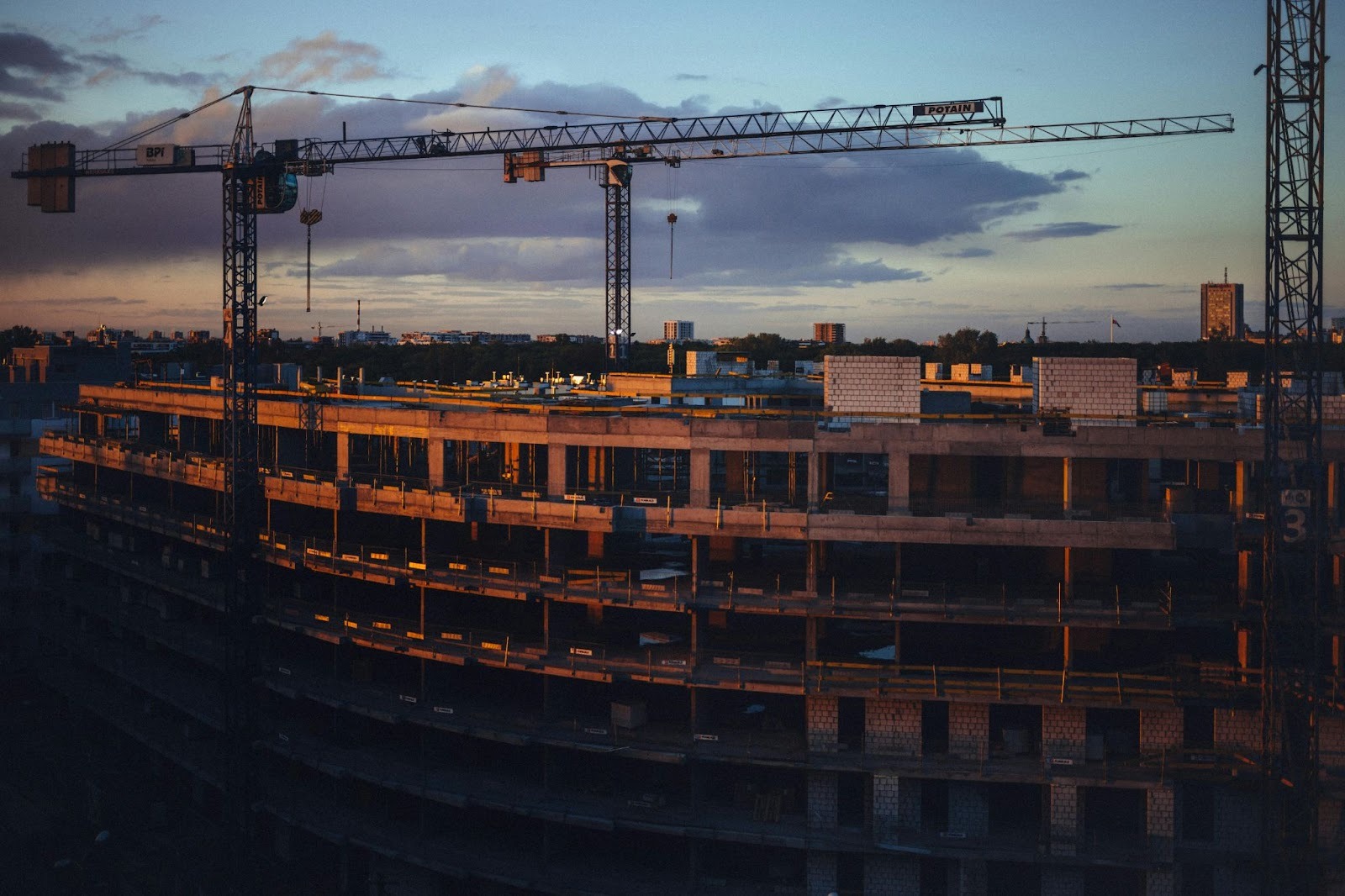
Image Credit: Pexels
5. Efficient Labour Management
Having a cohesive, efficient team has always been one of the most essential elements of commercial construction, and no matter how much technology has advanced over the years, that has remained the same.
It may be that in the future, automated cranes will largely replace human builders, but right now, there’s no replacement for a skilled team. Just as important, however, is the management of this team. A construction site can have dozens of people at a time dashing here, there, and everywhere tending to different aspects of the project, and in order to make sure everyone’s in the right place at the right time, there needs to be strong leadership.
6. Timeline Management
A very difficult aspect to get right is time management. There are so many moving parts within a commercial construction project, and one small slip-up can have a domino effect that disrupts everything behind and in front.
Multiple individuals are involved in keeping the timeline, and it needs to be both strict enough to mitigate any delays and flexible enough to allow for them. As is the case with many elements of construction, it’s one big balancing act.
7. Risk Management and Health & Safety
Construction sites are dangerous places – particularly large ones focused on erecting very tall buildings. The more components involved, the harder it is to keep everything in line and ensure both staff and the surrounding public are safe.
Full risk assessments are conducted at the beginning and throughout the project to make sure no stone is left unturned, and both national and local regulations must be adhered to at all times.
Insurance is another critical part that can take a lot of time for organizers to work through.
8. Quality Control
Commercial construction isn’t just about getting the job done as quickly and efficiently as possible – it’s just as essential to make sure things are done right.
Quality control is at the forefront of everyone’s minds. At every main stage, progress is assessed according to a set of strict rules to ensure both optimal functionality and aesthetic appeal, and within each of these stages, those building and constructing the project are checking their work routinely.
Ultimately, the construction companie’s and design consultants’ reputations are on the line, so it’s vital that they adhere not only to industry standards, but to their own internal criteria.
Wrapping Up
Modern construction can seem like magic, and if you’re interested in the topic or are entering into the industry, your enthusiasm likely began purely from wondering how on earth everything comes together so well and so efficiently.
Anything complex is the result of many smaller tasks being completed with care and attention. By understanding the aspects detailed above, prospective talent and decision makers can continue to advance the field further.