
Key Takeaways
- Low-voltage lighting operates at 12 or 24 volts, offering improved safety compared to standard 120-volt systems.
- It is ideal for landscapes, accent lighting, and areas around children and pets.
- Systems include a transformer, fixtures, and low-voltage wiring.
- LED compatibility increases energy efficiency and lifespan.
- Proper planning prevents voltage drop and ensures consistent performance.
Understanding Low-Voltage Lighting
Low-voltage lighting is a popular alternative to standard electrical lighting, operating at a significantly lower voltage of 12 or 24 volts. This reduction in voltage is made possible by a transformer that lowers the voltage from the regular household supply of 120 volts to a safer level. Despite this reduction, systems like low-voltage lighting in Austin, Texas can deliver impressive illumination. These systems are widely used for both residential and commercial lighting applications because they offer added safety and flexibility without sacrificing brightness or functionality.
This lighting solution is particularly favored for outdoor spaces, landscape highlights, and accent lighting due to its versatility in fixture styles and less invasive installation process. Low-voltage setups also make it easier for homeowners to tailor their lighting to suit both functional and aesthetic goals. Since the voltage is significantly reduced before reaching the fixtures, maintaining the installation and ongoing maintenance are much simpler and safer than with standard-voltage systems.
In homes and businesses, low-voltage systems are installed not only for their safety profile but also for their reduced energy consumption and adaptability to different environments. They can be an ideal solution, especially for families or facilities that require illumination around children, pets, or landscaping that could be impacted by traditional high-voltage wiring.
Low-voltage lighting also comes in a wide variety of designs, from sleek and modern fixtures to more traditional options. This range allows property owners to create a customized look while still enjoying the functional benefits. Moreover, the technology continues to evolve, with new advancements making these systems even more efficient and reliable.
Components of a Low-Voltage Lighting System
A typical low-voltage lighting system consists of several main components that work together seamlessly to deliver efficient and practical lighting:
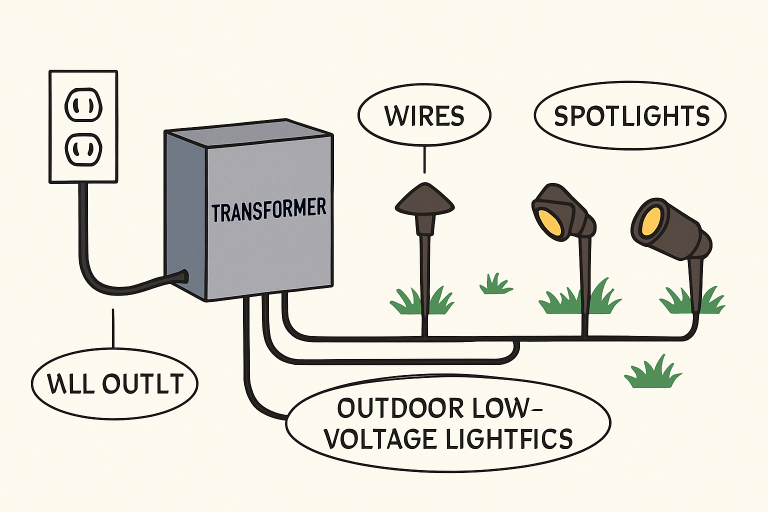
- Transformer: This core device steps down the high household voltage to the desired 12 or 24 volts, making the system safe for both indoor and outdoor applications.
- Light Fixtures: These are specially designed for low-voltage operation, including path lights, garden spotlights, string lights, and deck lighting.
- Wiring: Special cables designed for lower voltage safely carry electricity across any landscape or interior space, often requiring minimal digging or disruption during installation.
- Connectors and Timers: These essential accessories keep the system secure and enable users to automate their lighting for greater efficiency and convenience.
How Does Low-Voltage Lighting Work?
Low-voltage lighting systems convert the standard household electrical current to a much lower voltage suitable for safe, efficient use. The process begins when the transformer plugs into a regular wall outlet. The transformer then steps down the incoming 120-volt current to the preset low voltage, making the electricity safer to handle and less hazardous in damp or outdoor environments. The low-voltage current flows through specially designed wiring and powers the series of fixtures connected to the system.
This streamlined process not only fosters safer installation and operation but also opens up lighting design possibilities. There are fewer regulatory barriers than with high-voltage systems. Homeowners can also add features such as timers or smart controls for improved convenience and further energy efficiency.
Advantages of Low-Voltage Lighting
Low-voltage lighting systems continue to gain traction in the home improvement sphere because of their numerous advantages:
- Energy Efficiency: By consuming less energy, these systems help homeowners reduce their electricity bills and lower their carbon footprint. The use of LED bulbs in these systems can enhance energy savings due to their remarkable efficiency.
- Safety: The reduced voltage significantly decreases the risk of electrical shock, especially in outdoor and wet locations, or areas where children or pets are present.
- Versatility: A broad selection of fixture styles for many uses. Whether illuminating pathways, gardens, patios, or highlighting property features, low-voltage systems offer adaptability for a range of needs.
- Longevity: LED bulbs in low-voltage systems tend to last significantly longer than incandescent bulbs, reducing replacement frequency. This benefit translates to long-term savings and less waste.
Applications of Low-Voltage Lighting
Low-voltage lighting is well-suited for multiple scenarios, both indoors and outdoors:
- Outdoor Landscaping: Used to highlight gardens, flower beds, driveways, walkways, and water features for both aesthetics and safety.
- Indoor Accent Lighting: Perfect for under-cabinet lighting, display cases, or to accentuate artwork and architectural details. This application can help establish ambiance in living spaces and add value to interiors.
- Safety and Security: By providing consistent illumination in vulnerable outdoor areas, these systems help prevent falls and deter intruders.
Considerations When Installing Low-Voltage Lighting
While easier to install than their high-voltage counterparts, there are several factors to keep in mind with low-voltage lighting:
- Transformer Sizing: It is critical to match the transformer’s capacity to the total wattage of all connected fixtures. Oversizing or undersizing can impact system performance.
- Voltage Drop: Over longer wiring runs, voltage can drop, making lights farther from the transformer noticeably dimmer. To minimize voltage drop, use thicker wiring and plan the layout carefully.
- Fixture Placement: Strategic placement ensures optimal coverage, aesthetics, and functionality. Consider both appearance and practicality when deciding where each fixture will go.
Final Thoughts
Low-voltage lighting stands out as a safe, adaptable, and stylish solution for a wide range of lighting needs. With the right components, careful installation, and thoughtful design choices, these systems can dramatically enhance both the beauty and functionality of your home or business. By understanding the basics and best practices, you will be better prepared to make informed decisions that suit your space and personal preferences while reaping the energy savings and visual appeal only modern low-voltage lighting can provide.
Photo by Fadel Baskoro: