

In 2026, more people aren’t just stressed — they’re silently embittered.
Have you ever experienced betrayal, injustice, humiliation, or a life event that felt deeply unfair… and years later, the anger still lingers?
You may not be traumatized in the traditional sense — but you might be struggling with something called Post-Traumatic Embitterment Disorder (PTED).
And it’s more common than you think.
What Is Post-Traumatic Embitterment Disorder (PTED)?
Post-Traumatic Embitterment Disorder is a mental health condition triggered by a severe negative life event perceived as unjust.
Unlike PTSD, which stems from life-threatening trauma, PTED develops after:
- Betrayal in relationships
- Workplace injustice
- Divorce or abandonment
- Public humiliation
- Financial collapse
- Legal conflicts
- Sudden loss of status
The defining element is this:
👉 A violation of your personal values.
When something feels deeply unfair, it can reshape how you see the world.
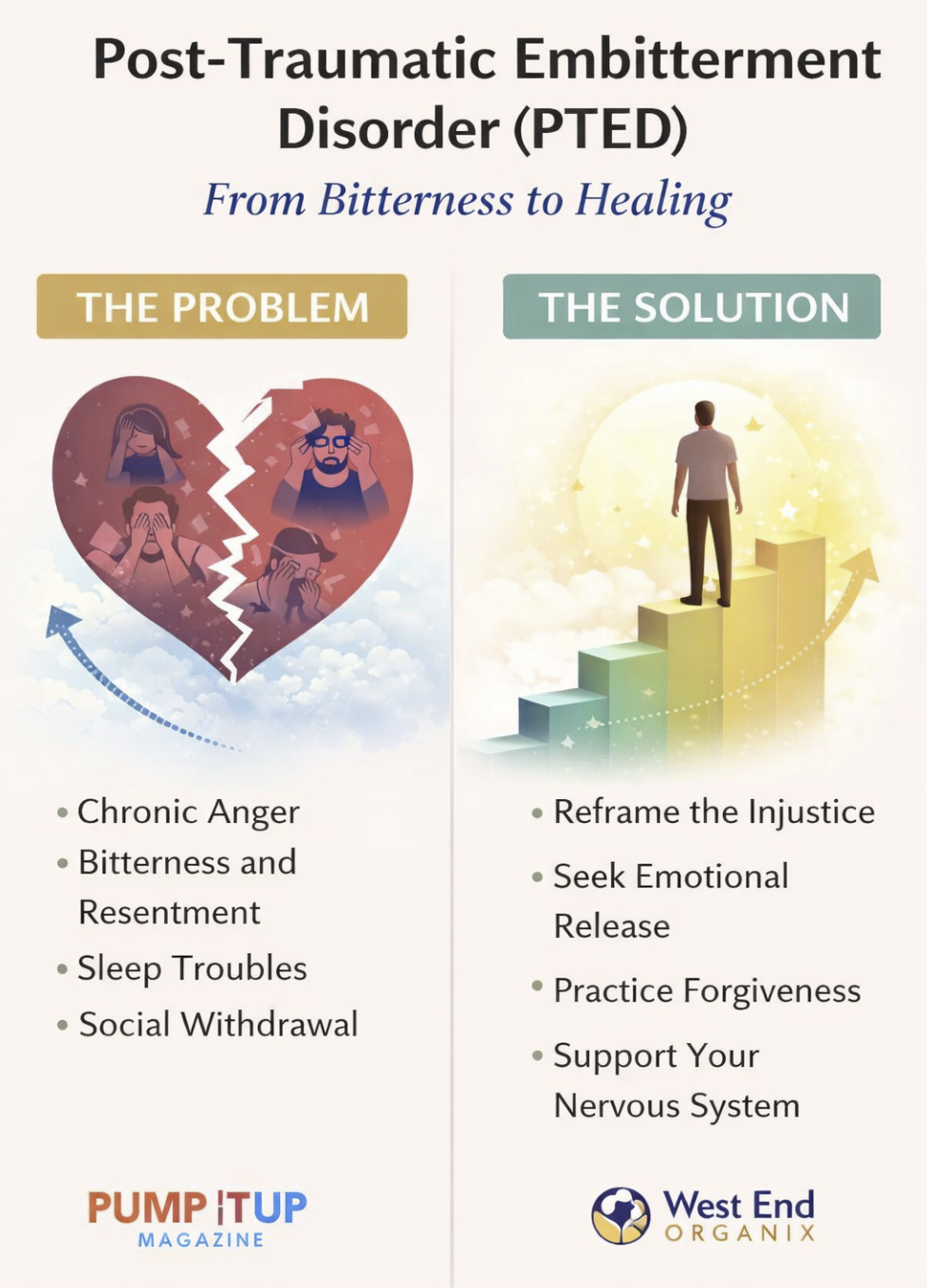
This visual breakdown explains how chronic bitterness can evolve into Post-Traumatic Embitterment Disorder (PTED). By focusing on emotional processing and nervous system regulation, healing becomes possible in 2026.This visual breakdown explains how chronic bitterness can evolve into Post-Traumatic Embitterment Disorder (PTED). By focusing on emotional processing and nervous system regulation, healing becomes possible in 2026.
PTED Symptoms: How to Recognize Chronic Embitterment
People struggling with PTED may experience:
- Persistent anger and resentment
- Intrusive thoughts about the event
- Desire for revenge
- Social withdrawal
- Loss of joy or motivation
- Sleep disturbances
- Feelings of helplessness
- Obsessive rumination
This isn’t “just being upset.”
It’s emotional stagnation.
And over time, chronic bitterness can impact your health, relationships, career, and spiritual well-being.
Why PTED Is Rising in 2026
In a digital era fueled by comparison, layoffs, public criticism, and social division, many people feel:
- Unrecognized
- Disrespected
- Overlooked
- Betrayed
- Economically pressured
Women entrepreneurs, especially, may carry silent resentment after:
- Being undervalued
- Facing unequal treatment
- Losing partnerships
- Experiencing business betrayal
When injustice is not processed, it turns inward.
And bitterness can quietly become identity.
Read: https://www.pumpitupmagazine.com/how-to-support-a-friend-or-family-member-in-crisis/
The Hidden Cost of Holding Onto Resentment
Chronic embitterment can lead to:
- High blood pressure
- Inflammation
- Anxiety and depression
- Strained relationships
- Career stagnation
- Creative blocks
You can’t move forward while mentally replaying the past.
Unresolved anger drains energy needed for growth.
How to Heal from Post-Traumatic Embitterment Disorder
Healing is possible.
Here’s how to begin:
1️⃣ Reframe the Narrative
Ask: What did this teach me?
Growth is the most powerful response to injustice.
2️⃣ Shift from Revenge to Release
Holding onto anger keeps you emotionally tied to the event.
Forgiveness is not approval.
It’s freedom.
3️⃣ Emotional Processing Practices
- Journaling
- Therapy (especially CBT)
- Prayer or meditation
- Breathwork
- Coaching
- Physical movement
You must move the emotion out of your body.
4️⃣ Rebuild Your Identity
You are not the betrayal.
You are not the job loss.
You are not the humiliation.
You are evolving.
5️⃣ Seek Professional Help
Cognitive Behavioral Therapy (CBT) has shown effectiveness in treating embitterment-related symptoms.
Recognizing the lasting impact of such experiences, individuals might also consider the legal avenues available to them when personal injury has occurred, which can involve consulting professionals like Hoffman, Sternberg, Karpf & Lynch, LLC to understand their rights and potential for recourse.
If anger feels uncontrollable or long-lasting, speak to a licensed mental health professional.
Faith & Empowerment Perspective
At Pump It Up Magazine, we believe:
Bitterness blocks blessings.
Healing unlocks destiny.
Whether through faith, therapy, or personal development, emotional freedom is possible.
You can acknowledge the injustice
Without allowing it to define your future.
Frequently Asked Questions (FAQ)
What is Post-Traumatic Embitterment Disorder (PTED)?
PTED is a psychological condition triggered by a severe negative life event perceived as unjust, leading to chronic bitterness, anger, and feelings of helplessness.
Is PTED the same as PTSD?
No. PTSD results from life-threatening trauma. PTED develops after events involving injustice, betrayal, or violation of personal values.
What are the main symptoms of PTED?
Common symptoms include persistent resentment, intrusive thoughts, desire for revenge, social withdrawal, sleep disturbances, and emotional rigidity.
Can PTED go away on its own?
Without emotional processing, PTED symptoms can last for years. Therapy, mindset shifts, nervous system regulation, and holistic wellness support can significantly improve recovery.
How can holistic wellness support emotional healing?
Holistic practices — including stress-supporting essential oils, grounding techniques, breathwork, and frequency-based wellness tools — may help regulate the nervous system and support emotional balance. West End Organix offers wellness tools designed to complement emotional healing journeys.
When should someone seek professional help?
If anger feels uncontrollable, long-lasting, or interferes with daily life, it’s important to seek support from a licensed mental health professional.
Final Thought: Protect Your Peace in 2026
In a world full of triggers, choose transformation.
You cannot control injustice.
But you can control your healing.
And healing is powerful.
Photo by Andrea Piacquadio: