
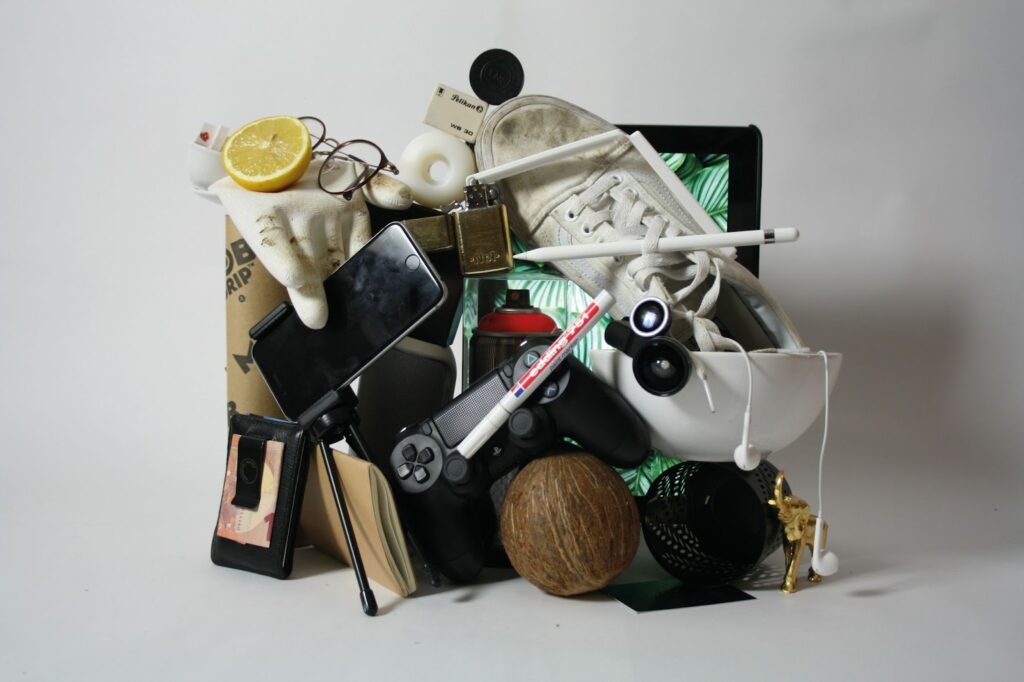
Junk clutters life at every turn, whether that means piles of unworn clothes, unsorted mail, or drawers overflowing with random odds and ends. While it might look harmless at first, clutter has far-reaching consequences on your mental health that most don’t realize. Getting rid of junk not only creates more space, but it also restores peace of mind while fueling your emotional well-being.
Photo by Luca Laurence on Unsplash
The Silent Weight of Junk
What is the real cost of disorganization? Clutter has been linked with higher levels of stress and anxiety, with research showing that chaotic environments can overstimulate senses and raise cortisol levels (commonly referred to as the stress hormone). When your surroundings are unruly, it often echoes your inner turmoil, amplifying internal strife further. Beyond your stress levels alone, clutter also inhibits focus and productivity by diluting your concentration. In short, clutter is not only an eyesore but also a distraction that impairs prioritizing and processing tasks effectively.
Decluttering as Self-Care
Clearing away junk is more than a chore, it’s an act of self-care. A clean, organized space not only looks nice, but it also promotes a calmer, more focused mindset. Decluttering acts as an immediate mental reset for our minds to signal that chaos has been addressed and order restored. Letting go of items no longer needed also feels cathartic. Old clothes, memorabilia, or broken gadgets, when you part ways with them, it feels liberating. As it allows emotional baggage to be released while making way for new opportunities, both physically and psychologically.
Practical Tips to Declutter
Go with the “One-In, One-Out” rule. For every new item you bring into the home, remove one that no longer serves its purpose. This prevents the pile of junk from increasing unnoticed.
- Start Small: Tackling an entire house may feel exhausting, so starting by organizing just one drawer or shelf can help make the task more manageable and generate momentum for further change.
- Be Honest: To determine whether an item should be kept, ask yourself the following: “Am I using this regularly, or does it bring me ‘joy’?” If the answer is no, it may be time to part ways.
- Donating or Recycling: Understanding that your items can be reused by others often makes parting with them less of a struggle, easing any guilt you might feel about recycling and supporting environmental sustainability.
Getting Junk Removal Services
Hiring a professional junk removal service can make the difference when it comes to decluttering projects. Professional services offer efficient solutions that handle heavy lifting of unwanted items quickly and responsibly, often recycling or donating them when possible to promote eco-friendly disposal solutions. This not only saves you a lot of time and effort but also ensures proper disposal of larger objects or hazardous materials that might otherwise be difficult for you alone to dispose of safely.
Conclusion
While decluttering often requires difficult decisions and commitment of time and energy, its rewards cannot be denied. A junk-free space leads to a clutter-free mind, creating an environment that promotes your mental well-being instead of hindering it. So remember when junk builds up that parting with it means more than simply getting rid of objects. It means regaining peace, control, and mental freedom one item at a time.