
Key Takeaways
- Regular inspections help identify tree health issues early.
- Proper watering and mulching are essential for tree vitality.
- Pruning promotes healthy growth and prevents hazards.
- Protecting trees from pests and diseases ensures longevity.
- Professional arborist consultations can address complex tree care needs.
Introduction
Trees offer more than curb appeal for homeowners: they play a crucial role in creating vibrant neighborhoods, improving air quality, and providing much-needed shade. In Northlake, where seasonal weather variations challenge even the hardiest species, healthy trees are vital to property values and neighborhood beauty. Ensuring your landscape’s trees remain healthy depends on proper care techniques, early intervention, and expert advice, such as that from a trusted arborist Northlake.
Beyond their visible beauty, trees support ecosystems by providing habitat for wildlife and reducing stormwater runoff. In residential settings, healthy trees can even lower summer cooling bills and reduce noise pollution. With the proper care routines, every homeowner can help ensure their trees stay resilient through Texas’s storms and dry spells.
Getting started with a tree care regimen is easier than most people realize. The key is combining regular attention with a foundational understanding of what trees need to thrive at each stage of life. Alongside professional support for complex concerns, this approach leads to a greener, safer community for everyone.
Residential tree care also requires staying informed about best practices and recognizing when to call in expert help. By fostering a proactive mindset, homeowners minimize long-term risks and reduce overall maintenance costs.
Regular Inspections to Catch Issues Early
Early detection remains one of the most powerful tools for keeping residential trees healthy. Homeowners should walk their property at least once a month to look for warning signs. These may include yellowing or wilting leaves, cracks in the bark, unusual bumps or growths, and any evidence of insect damage at leaf or branch junctions.
Prompt attention to these symptoms, like removing a few affected leaves or pruning a small diseased limb, can spare a tree from more severe issues later. The Arbor Day Foundation recommends establishing a seasonal checklist to make inspection a routine habit.
Proper Watering Techniques for Different Tree Ages
Watering is critical, but the frequency and method depend on a tree’s age and species. Young, newly planted trees require thorough soaking a couple of times per week during hot or dry weather. This helps their young roots expand deeper and faster into the soil. Established trees usually benefit from less frequent, deeper irrigation, which strengthens root systems and enhances drought resistance.
Avoid shallow, daily watering, since this encourages roots to gather near the surface, where they are more vulnerable to heat stress and drying winds. Instead, use a slow hose or a drip system to allow moisture to soak in gradually. Always check that the soil drains well around each tree to prevent root rot from persistent wetness.
Mulching for Moisture and Nutrient Retention
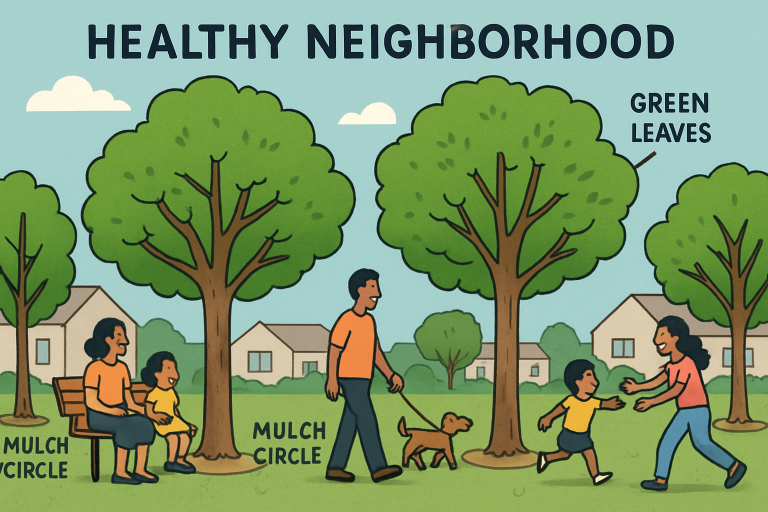
Mulching is a simple yet highly effective way to support trees year-round. Spread a 2- to 4-inch layer of organic mulch, such as chipped bark, wood shavings, or leaf compost, around the base of each tree, extending to the dripline if possible. This layer helps lock in soil moisture, moderates temperature swings, and curbs weed growth that competes for nutrients.
Be careful to pull mulch a few inches away from the trunk itself. Piling it against tree bark can trap excess moisture, leading to rot and inviting insects. As mulch decomposes, it releases nutrients back into the soil, creating a natural, self-sustaining boost for nearby plant life. According to Better Homes & Gardens, consistent mulching is one of the easiest ways to improve the long-term vitality of trees.
Smart Pruning to Shape Growth and Prevent Hazards
Regular pruning is essential for a tree’s structure and overall health. By removing dead, damaged, or diseased branches, homeowners enable trees to redirect energy into healthy growth and reduce the risk of falling limbs, which can pose a safety threat to property and people. Late winter or early spring is usually the best time to prune, minimizing stress on trees while they are still dormant.
When removing larger limbs or reaching high branches, always consider using professional services to prevent injury and ensure correct technique. For expert recommendations on pruning methods, the U.S. Forest Service outlines proper pruning cuts and timing for different species.
Managing Pests and Preventing Disease
Pests and diseases can devastate unprotected trees within weeks. Keep an eye out for signs like leaf spots, trunk bore holes, premature leaf drop, or sticky residue (which can indicate insect infestations). At first sight of any unusual patterns, investigate further and identify the source. Many issues can be controlled early with pruning and the right applications of horticultural oils or safe pesticides, but infestations that spread quickly require a skilled diagnosis.
For severe cases or hard-to-manage diseases, a certified arborist has the knowledge and equipment to apply targeted solutions without harming nearby plants or pollinators. Early intervention reduces the risk of tree loss and keeps neighborhood foliage healthy for the future.
When to Call a Professional Arborist
Particular tree care needs are too complex or hazardous for DIY methods. Storm-damaged trees, those close to buildings or power lines, and those showing advanced disease should continuously be assessed by a certified expert. A dependable arborist can perform structural pruning, deep root feeding, pest management, and emergency removal when necessary.
Regular consultation with a tree professional enables early risk identification and safe care interventions that keep the broader landscape safe and beautiful. In Northlake, investing in quality arborist guidance ensures your trees thrive for generations.
Conclusion
Healthy residential trees are an investment in the community’s beauty and well-being. By conducting regular inspections, providing appropriate water and mulch, practicing smart pruning, and staying vigilant for pests, homeowners can maintain thriving trees that add lasting value and comfort to their neighborhoods. For advanced concerns, never hesitate to consult an arborist who has the experience to address complex issues. With ongoing care, every tree can reach its full potential and contribute to a stronger, greener community.
Photo by Valentin S: