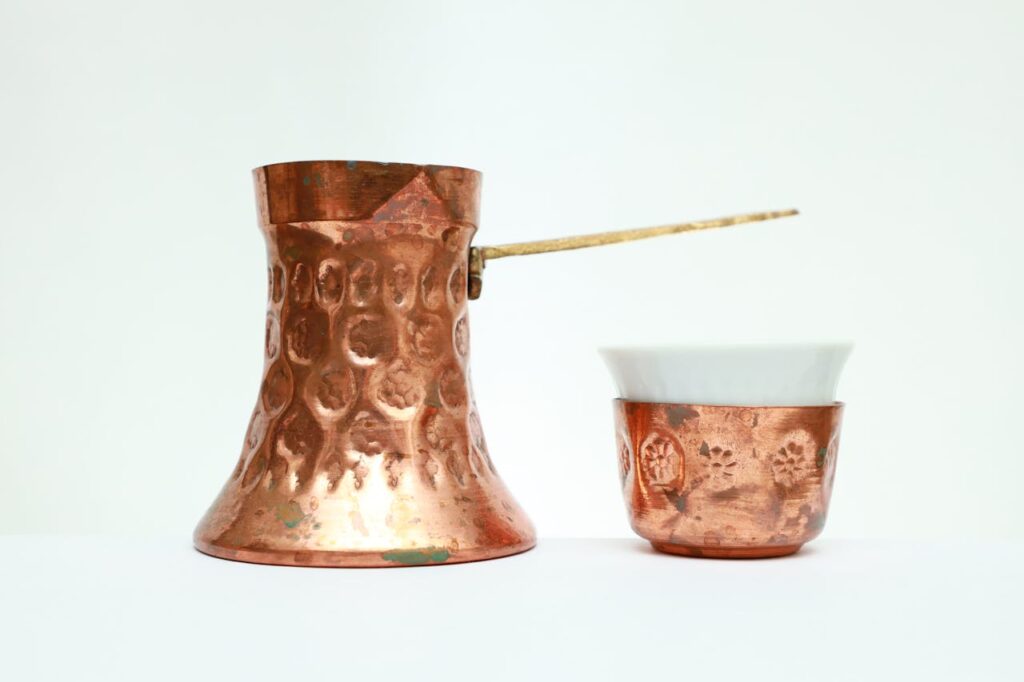
For centuries, hospitals and healing spaces relied on copper vessels and linen sheets—not as decoration, but as practical tools for health, hygiene, and recovery. Long before modern disinfectants and synthetic materials, ancient systems understood something we’re only now beginning to appreciate again: materials matter.
Today, as wellness and mental health conversations shift toward natural, supportive environments, copper and linen are quietly making a return.
So why did they disappear—and why are they coming back?
The Forgotten Wisdom Behind Copper in Healing Spaces
Copper has been used across civilizations for thousands of years, from Ancient Egypt and Greece to Ayurveda and Traditional Chinese Medicine.
Why copper mattered:
- Naturally antimicrobial
- Used to purify drinking water
- Resistant to bacteria and pathogens
- Durable and reusable
Modern science now confirms what ancient cultures practiced.
According to the World Health Organization, copper surfaces can significantly reduce harmful microbes in healthcare environments:
👉 https://www.who.int/publications/i/item/WHO-HTM-NTD-VEM-2011.1
The U.S. Environmental Protection Agency (EPA) also recognizes copper as the only solid metal registered to kill bacteria on contact:
👉 https://www.epa.gov/pesticide-registration/copper-alloy-products
This made copper cups, basins, and tools ideal for hospitals when sanitation was critical and chemical disinfectants didn’t exist.
Why Linen Sheets Were Chosen Over Synthetic Fabrics
Linen wasn’t about luxury — it was about function and recovery.
Linen benefits:
- Breathable and temperature-regulating
- Gentle on sensitive or inflamed skin
- Naturally resistant to bacteria
- Highly durable and washable
In recovery settings, linen helped reduce irritation, overheating, and discomfort, especially when the body was weakest.
Modern textile studies confirm linen’s breathability and antimicrobial properties:
👉 https://www.ncbi.nlm.nih.gov/pmc/articles/PMC5452224/
So Why Did Hospitals Stop Using Them?
As healthcare systems industrialized, priorities shifted.
Modern systems favored:
- Lower production costs
- Faster mass manufacturing
- Disposable materials
- Synthetic textiles
While efficient, these changes often ignored long-term wellness, skin sensitivity, and environmental impact.
What was lost wasn’t tradition — it was balance.
The Wellness Revival: Why Copper Is Back in Focus
Today’s wellness movement isn’t about trends — it’s about reconnection.
Copper is now being revisited for:
- Drinking water storage
- Home wellness rituals
- Mindful living practices
- Holistic health environments
Research continues to explore copper’s role in hygiene and microbial control:
👉 https://www.ncbi.nlm.nih.gov/pmc/articles/PMC3067274/
At Pump It Up Magazine, we explore how ancient wisdom intersects with modern mental health, wellness, and lifestyle practices.
👉 Internal link suggestion: https://www.pumpitupmagazine.com/category/wellness/
👉 Internal link suggestion: https://www.pumpitupmagazine.com/category/mental-health/
Copper, Energy & Emotional Wellness
Beyond physical benefits, copper has long been associated with energy balance and emotional grounding in holistic traditions.
Many people exploring wellness today are also working to:
- Release emotional stress
- Clear energetic blocks
- Create calmer living environments
At West End Organix, holistic wellness sessions are designed to help release trapped emotions and restore emotional balance naturally.
👉 Learn more or book a session:
https://westendorganix.com
Ancient Wisdom, Modern Confirmation
Copper cups. Linen sheets. Natural materials.
Sometimes, ancient systems understood the body better than modern convenience allows.
As wellness and mental health continue to take center stage, revisiting these materials isn’t about nostalgia — it’s about supporting the body, mind, and environment together.
At Pump It Up Magazine, we believe real growth happens when knowledge, wellness, and intention align.
Related Reading on Pump It Up Magazine
- Wellness & Healing Practices
👉 https://www.pumpitupmagazine.com/category/wellness/ - Mental Health & Emotional Balance
👉 https://www.pumpitupmagazine.com/category/mental-health/ - Lifestyle & Conscious Living
👉 https://www.pumpitupmagazine.com/category/lifestyle/
Frequently Asked Questions (FAQ)
❓ Why did hospitals use copper cups in the past?
Hospitals historically used copper cups because copper is naturally antimicrobial. Long before chemical disinfectants existed, copper helped reduce bacteria in drinking water and on surfaces, making it a practical material for hygiene and recovery.
❓ Is copper scientifically proven to kill bacteria?
Yes. Modern research confirms that copper has antimicrobial properties. The U.S. Environmental Protection Agency (EPA) recognizes copper alloys as effective at killing certain bacteria on contact, which is why copper is still studied for healthcare environments today.
❓ Why were linen sheets preferred in hospitals?
Linen was chosen because it is breathable, durable, and gentle on the skin. It helps regulate body temperature and is naturally resistant to bacteria, making it ideal for patients during rest and recovery.
❓ Why did hospitals stop using copper and linen?
As healthcare systems modernized, priorities shifted toward cost efficiency, speed, and mass production. Synthetic materials and disposables became more common, even though they don’t always offer the same comfort or natural benefits as copper and linen.
❓ Is copper still used in modern healthcare?
Yes. Copper is still researched and used in some healthcare settings, especially for high-touch surfaces, because of its antimicrobial properties. Interest in copper has also grown in wellness and home health spaces.
❓ Does drinking water from copper cups have benefits?
Many traditional wellness systems believe storing water in copper vessels supports overall balance. While copper has antimicrobial properties, it’s important to use copper safely and responsibly and not treat it as a medical solution.
❓ How does copper relate to wellness and emotional balance?
In holistic traditions, copper is associated with grounding and balance. Many people include copper in wellness routines as part of a mindful lifestyle that supports emotional clarity and calm environments.
❓ Are copper and linen part of the modern wellness movement?
Yes. As wellness trends shift toward natural materials and intentional living, copper and linen are being revisited for their historical role in hygiene, comfort, and holistic well-being.
❓ Where can I learn more about holistic wellness practices?
You can explore wellness, mental health, and lifestyle articles on Pump It Up Magazine, and learn about emotional wellness sessions and natural approaches at WestEndOrganix.com.