Black History Month is a time to honor legacy. But legacy is not just about the past — it is about the courage to build a better future.
For generations, mental health in Black communities has been surrounded by silence, stigma, and systemic barriers. Cultural expectations often emphasized strength, endurance, and resilience — sometimes at the expense of emotional support.
Today, that narrative is shifting.
And some of the most powerful voices leading this change are Black artists who are using their platforms not just to inspire — but to heal.
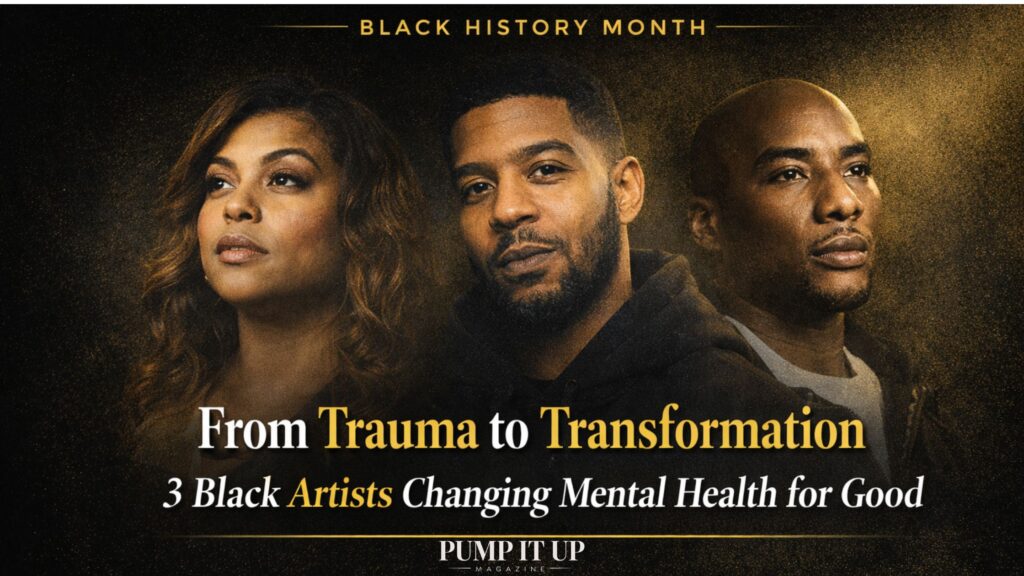
This Black History Month, we spotlight three influential figures transforming mental health access, awareness, and advocacy.
Why Mental Health Is a Critical Issue in Black Communities
According to the American Psychological Association (APA), Black Americans are less likely to receive mental health treatment compared to white Americans, despite experiencing higher exposure to chronic stress and systemic inequalities.
The National Alliance on Mental Illness (NAMI) also reports that stigma and lack of culturally competent providers remain major barriers.
Mental health is not just personal — it is systemic.
It is cultural.
It is generational.
And that is why visibility matters.
👉 For more insight on emotional resilience, visit our Mental Health category:
1. Taraji P. Henson — Building Access Through the Boris Lawrence Henson Foundation
Award-winning actress Taraji P. Henson founded the Boris Lawrence Henson Foundation to address the mental health crisis within Black communities.
Her mission includes:
- Providing scholarships to Black students pursuing mental health careers
- Increasing access to culturally competent therapists
- Normalizing therapy conversations in Black households
Her advocacy was inspired by her father’s struggle with mental health after military service — a reminder that untreated trauma can ripple across generations.
Access changes outcomes.
And representation builds trust.
👉 Related reading on emotional healing:
https://www.pumpitupmagazine.com/category/wellness/
2. Kid Cudi — Redefining Emotional Strength in Hip-Hop
Long before mental health became a trending topic in entertainment, Kid Cudi openly discussed depression, anxiety, and suicidal thoughts.
In 2016, he publicly checked into rehab — breaking stigma in an industry often defined by emotional suppression.
His openness reshaped conversations around masculinity and vulnerability.
Research shows that when public figures share mental health struggles, stigma decreases and help-seeking behavior increases (CDC).
By choosing vulnerability, Cudi created cultural permission for others to seek help.
Strength is not silence.
Strength is self-awareness.
3. Charlamagne Tha God — Normalizing Therapy in Mainstream Black Media
Media personality Charlamagne Tha God has become one of the strongest advocates for therapy within Black culture.
He openly discusses:
- Panic attacks
- Anxiety
- Trauma
- The transformative impact of therapy
He has used books, interviews, and media platforms to make therapy conversations culturally normal — particularly among Black men.
This matters.
Because stigma thrives in silence.
And silence thrives in isolation.
Therapy conversations reduce isolation.
The Cultural Impact of Black Mental Health Advocacy
Mental health disparities are not accidental.
According to the U.S. Department of Health & Human Services, Black adults are more likely to report persistent feelings of sadness but less likely to receive treatment.
Advocacy from visible figures:
✔ Reduces stigma
✔ Encourages intergenerational dialogue
✔ Expands culturally competent services
✔ Inspires younger generations
When influence meets intention, communities shift.
Black History Month and Emotional Liberation
Black History Month has always honored resilience — from civil rights leaders to cultural pioneers.
Today, emotional healing is part of that legacy.
Healing is:
- Breaking generational trauma
- Normalizing therapy
- Protecting mental wellness
- Creating safe spaces
And that is revolutionary.
If you’re exploring your own emotional healing journey, you may also find value in our features on:
• Overcoming emotional burnout
• Releasing trapped emotions
• Building resilience after trauma
Explore more in our Wellness section:
Final Thoughts: From Survival to Support
Legacy is not only measured in awards or album sales.
It is measured in access.
In resources.
In safe spaces.
This Black History Month, we honor not only the artists who shaped culture — but those reshaping mental health conversations within it.
Because healing is not weakness.
It is empowerment.
And empowerment is part of Black history.